



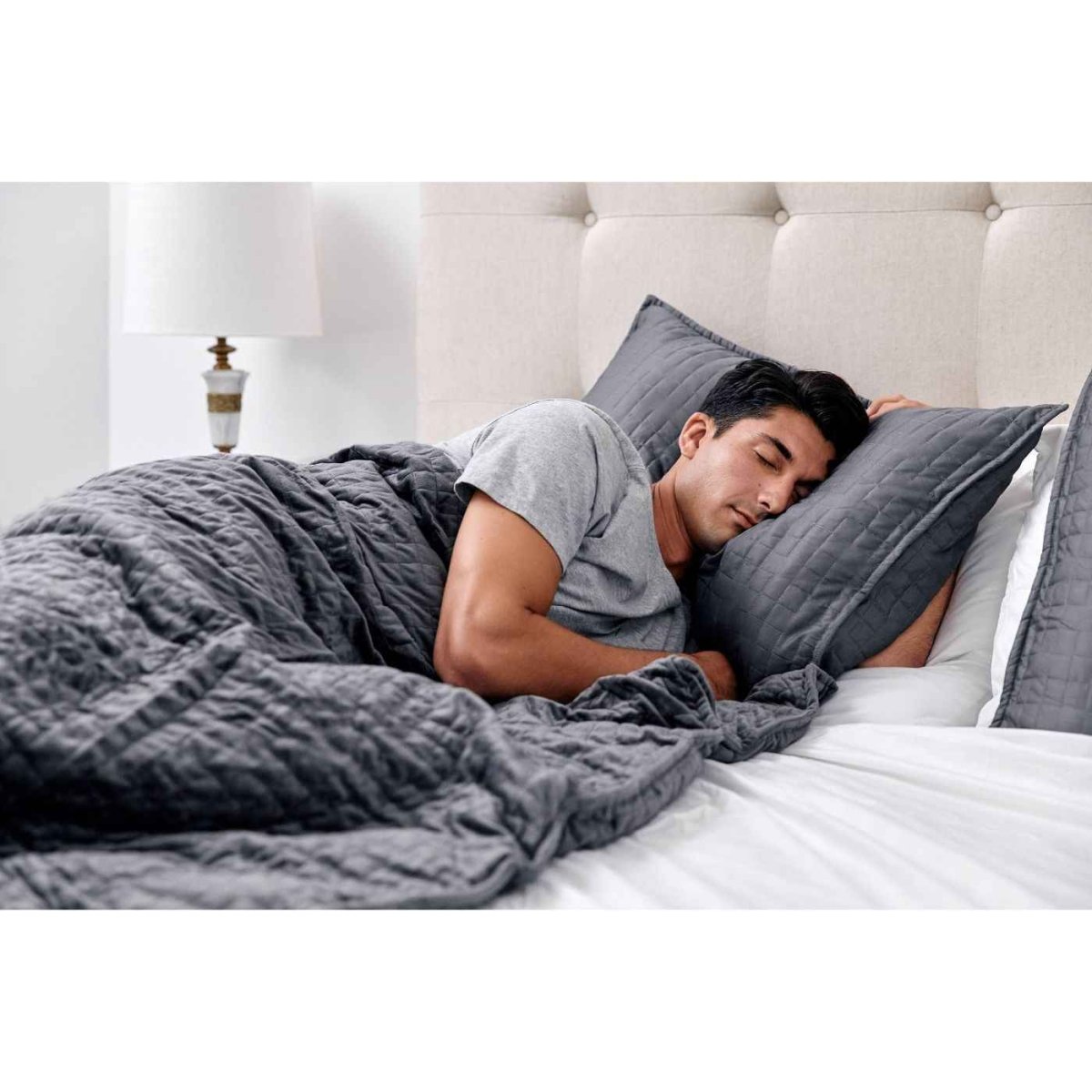
Comment choisir une couverture thérapeutique pour adultes
Une couverture thérapeutique pour adultes peut sembler un petit changement jusqu'à la première nuit où elle aide enfin votre corps à se détendre. Si vous allez au lit stressé, que vous vous réveillez souvent ou que vous avez du mal à calmer un esprit agité, la bonne couverture peut créer un environnement de sommeil plus stable et plus ancré sans compliquer votre routine.
C'est une partie de l'attrait. Une couverture thérapeutique bien faite ne vise pas à ajouter plus de choses à gérer. Il s'agit d'une pression douce et constante qui aide de nombreux adultes à se sentir plus calmes la nuit, plus confortables pendant les temps d'arrêt et moins surstimulés à la fin d'une longue journée.
Ce que fait réellement une couverture thérapeutique pour adultes
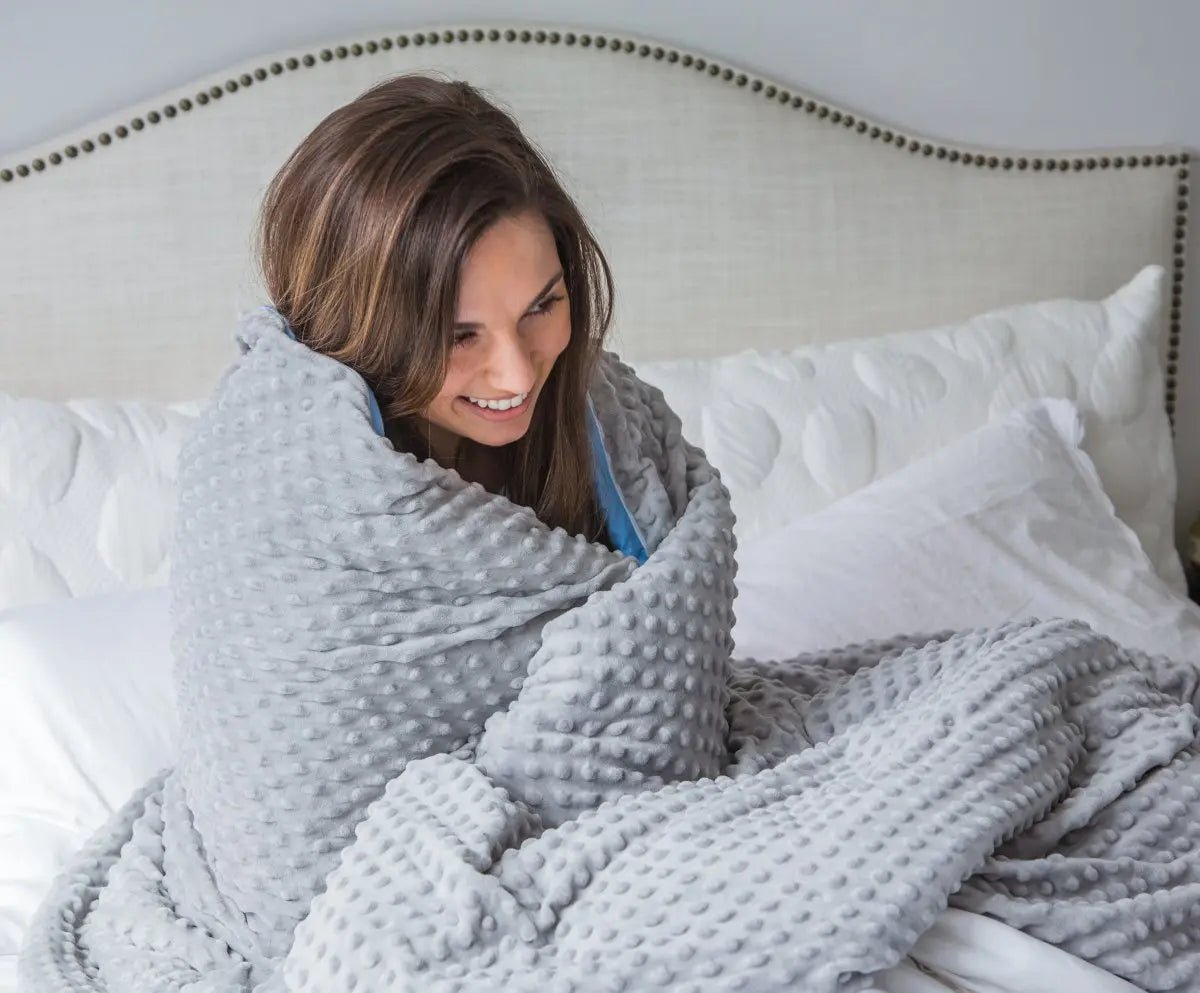
Une couverture thérapeutique pour adultes est généralement une couverture lestée conçue pour appliquer une pression uniforme sur le corps. Cette sensation est souvent décrite comme ancrante ou enveloppante. Pour de nombreuses personnes, elle favorise la relaxation d'une manière qui semble immédiate et physique plutôt qu'abstraite.
L'effet est souvent lié à la pression tactile profonde, qui peut aider le système nerveux à passer à un état plus calme. Cela peut être important si vos soirées sont agitées, nerveuses ou mentalement bruyantes. Bien qu'il ne s'agisse pas d'un traitement médical en soi, elle peut être un élément significatif d'une routine de sommeil basée sur le confort, la régularité et la réduction du stress.
Ce qui la rend thérapeutique n'est pas seulement le poids ajouté. C'est l'équilibre entre la pression, la respirabilité et le confort général. Une couverture trop chaude, trop lourde ou mal construite peut contrecarrer le calme que vous essayez de créer.
Qui bénéficie le plus d'une couverture thérapeutique
Tout le monde n'achète pas pour la même raison, et c'est important lors du choix de la bonne couverture.
Certains adultes recherchent un soutien pour les soirées anxieuses, surtout lorsque le stress a tendance à se manifester le plus au moment du coucher. D'autres sont des dormeurs légers qui se réveillent à chaque changement de température ou de mouvement. Certains veulent simplement un plus grand confort en lisant, en se reposant ou en décompressant après le travail.
Les couvertures thérapeutiques attirent également les adultes sensibles à la surstimulation. Si votre corps a du mal à se calmer après les écrans, le bruit, les longues journées de travail ou les exigences parentales, un poids doux peut créer un signal qu'il est sûr de se reposer. Pour les acheteurs de cadeaux, c'est souvent pourquoi une couverture lestée semble plus attentionnée qu'une literie ordinaire. Elle offre un confort avec un objectif clair.
Pourtant, cela dépend de la personne. Certains dormeurs adorent l'effet d'étreinte immédiatement. D'autres ont besoin de quelques nuits pour s'adapter. Et certains peuvent préférer un contact plus léger, surtout s'ils ont déjà chaud en dormant ou n'aiment pas la sensation d'être bordé.
Comment choisir le bon poids
C'est généralement la première question, et pour une bonne raison. Le poids change toute l'expérience.
Une ligne directrice courante est de choisir une couverture qui représente environ 8 à 12 % de votre poids corporel, mais cette fourchette n'est qu'un point de départ. Si vous débutez avec les couvertures lestées, opter pour un poids légèrement plus léger peut être plus confortable et plus facile à adapter. Si vous savez déjà que vous aimez une pression ferme et ancrante, vous préférerez peut-être quelque chose plus proche de l'extrémité supérieure.
La position de sommeil est également importante. Les dormeurs sur le côté et les personnes ayant une sensibilité articulaire peuvent préférer une couverture qui semble substantielle sans être dense. Les dormeurs sur le dos apprécient parfois un peu plus de poids, surtout s'ils souhaitent une sensation de calme plus forte sur le torse et les jambes.
Plus grand n'est pas toujours mieux ici. Une couverture qui semble trop lourde peut rendre le sommeil moins réparateur, surtout si vous bougez souvent pendant la nuit ou si vous voulez quelque chose pour dormir et vous détendre. L'objectif est un confort stable, pas une restriction.
Le tissu est plus important que la plupart des gens ne l'imaginent
Le tissu extérieur détermine si une couverture thérapeutique est apaisante pendant dix minutes ou confortable toute la nuit.
Si vous avez chaud en dormant, les matériaux respirants font une réelle différence. Les tissus à base de bambou sont particulièrement populaires parce qu'ils sont doux, frais au toucher et mieux adaptés à une utilisation toute l'année. Pour de nombreux adultes, c'est la différence entre aimer une couverture lestée et la repousser à mi-chemin de la nuit.
Si la chaleur fait partie de l'objectif, les textures douces comme le sherpa peuvent être profondément réconfortantes, surtout pendant les mois plus froids ou dans les chambres avec des courants d'air. Mais il y a un compromis. Plus le tissu est douillet, plus il peut retenir la chaleur. Cela peut être parfait en hiver et frustrant en été.
Une bonne couverture thérapeutique doit sembler réfléchie, pas pour une seule saison, à moins que ce ne soit exactement ce que vous voulez. De nombreux adultes sont mieux servis par une couverture qui équilibre la douceur et la respirabilité afin qu'elle reste utile une plus grande partie de l'année.
La construction n'est pas seulement un détail de conception
Deux couvertures peuvent sembler similaires en ligne et être complètement différentes à l'usage.
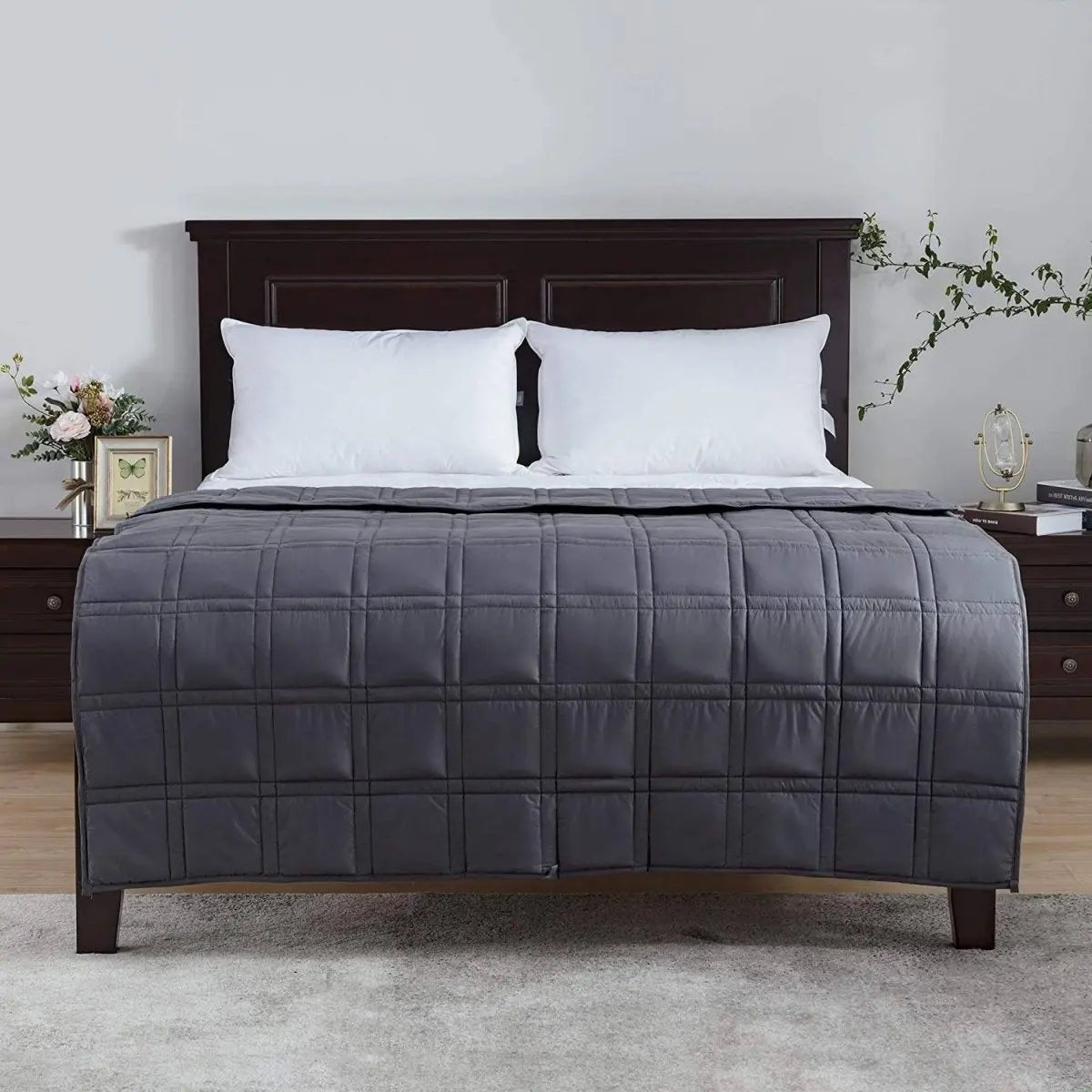
Les meilleures couvertures thérapeutiques distribuent le poids uniformément, de sorte que le rembourrage ne se déplace pas dans les coins ou ne s'accumule pas pendant la nuit. Des sections plus petites et cousues aident généralement à maintenir une sensation plus équilibrée sur le corps. Cela crée une pression plus douce et plus stable qui est apaisante plutôt que distrayante.
La qualité du matériau est également importante pour le bruit, le drapé et la durabilité. Une couverture de qualité supérieure a tendance à bouger plus naturellement avec le corps et à se sentir moins rigide sur le lit. Cette sensation raffinée peut sembler subtile, mais c'est souvent ce qui distingue une couverture que vous utilisez toutes les nuits d'une autre qui reste pliée au pied du lit.
Pour les adultes qui investissent dans un meilleur repos, il vaut la peine de prêter attention aux certifications et à l'intégrité du tissu. Les textiles doux pour la peau et les matériaux soigneusement sélectionnés ajoutent une assurance, surtout pour les dormeurs sensibles.
Une couverture thérapeutique pour adultes doit correspondre à votre style de sommeil
Le bon choix dépend moins des tendances et plus de la façon dont vous dormez réellement.
Si vous avez tendance à avoir chaud, recherchez des matériaux rafraîchissants ou évacuant l'humidité et un poids qui procure une sensation apaisante sans piéger l'excès de chaleur. Si votre stress culmine la nuit, une sensation légèrement plus lourde peut offrir un soutien plus ancrant. Si vous achetez pour le sommeil et la relaxation diurne, la polyvalence est importante. Une couverture utilisée sur le canapé doit toujours être facile à soulever, à plier et à repositionner.
Les lits partagés ajoutent une autre dimension. Certains couples préfèrent une couverture thérapeutique individuelle plutôt qu'une seule couverture lestée surdimensionnée. Cela permet d'éviter les tiraillements, la distribution inégale et le problème où un partenaire aime le poids tandis que l'autre non.
C'est là qu'un peu d'honnêteté aide. Si vous savez que vous enlevez les couches lourdes, ne vous forcez pas à choisir l'option la plus lourde parce que cela semble plus thérapeutique. Si vous désirez une pression confortable et que vous empilez toujours les couvertures, un modèle léger pourrait vous laisser insatisfait.
À quoi s'attendre la première semaine
Une couverture thérapeutique peut être rassurante dès la première utilisation, mais l'adaptation est toujours normale.
Certains adultes dorment bien avec elle immédiatement. D'autres s'en sortent mieux en commençant par de courtes périodes de repos avant de l'utiliser toute la nuit. Cette approche progressive peut aider votre corps à s'habituer à la pression ajoutée, surtout si vous êtes sensible aux changements dans votre environnement de sommeil.
Vous remarquerez peut-être également que votre poids préféré pour dormir n'est pas le même que votre poids préféré pour vous détendre. Une couverture qui semble parfaite en lisant peut sembler trop substantielle à 2 heures du matin. Ce n'est pas un échec. C'est simplement une partie de l'apprentissage du type de soutien auquel votre corps réagit le mieux.
Une période d'essai de qualité peut être vraiment utile ici. Des marques comme Better Sleep comprennent que le confort est personnel, et avoir le temps d'expérimenter une couverture à la maison peut rendre la décision beaucoup plus facile.
Quand une couverture thérapeutique peut ne pas convenir
Les couvertures lestées sont utiles pour de nombreux adultes, mais elles ne sont pas universelles.
Si vous avez certains problèmes de circulation, de mobilité ou respiratoires, il est sage de consulter un professionnel de la santé avant d'en utiliser une. Il en va de même si vous n'aimez pas toute sensation de compression pendant le repos. Le confort doit être apaisant, jamais claustrophobique.
Il y a aussi le côté pratique. Certaines couvertures lestées sont plus difficiles à laver, plus lourdes à déplacer ou moins pratiques pour les personnes qui changent souvent de literie. Si la facilité d'entretien est importante pour vous, cela devrait faire partie de la décision, et non une arrière-pensée.
Comment savoir si vous avez trouvé la bonne
La bonne couverture thérapeutique pour adultes ne se manifeste généralement pas de manière spectaculaire. Elle apparaît discrètement.
Vos épaules se détendent plus tôt. Vous vous sentez moins agité sur le canapé. L'heure du coucher ressemble moins à une bataille avec vos propres pensées. Vous pouvez toujours avoir des journées stressantes, mais votre routine du soir commence à sembler plus favorable et moins fragile.
C'est la vraie valeur de bien choisir. Pas seulement une couverture plus lourde, mais un meilleur type de confort - un confort qui favorise un repos plus profond, des nuits plus calmes et une chambre qui semble plus réparatrice à retrouver.
Si vous en envisagez une, commencez par votre corps, votre température de sommeil et le type de confort que vous recherchez réellement à la fin d'une longue journée. Les meilleures solutions de sommeil sont souvent celles qui semblent suffisamment simples pour continuer à être utilisées.


Laissez un commentaire