


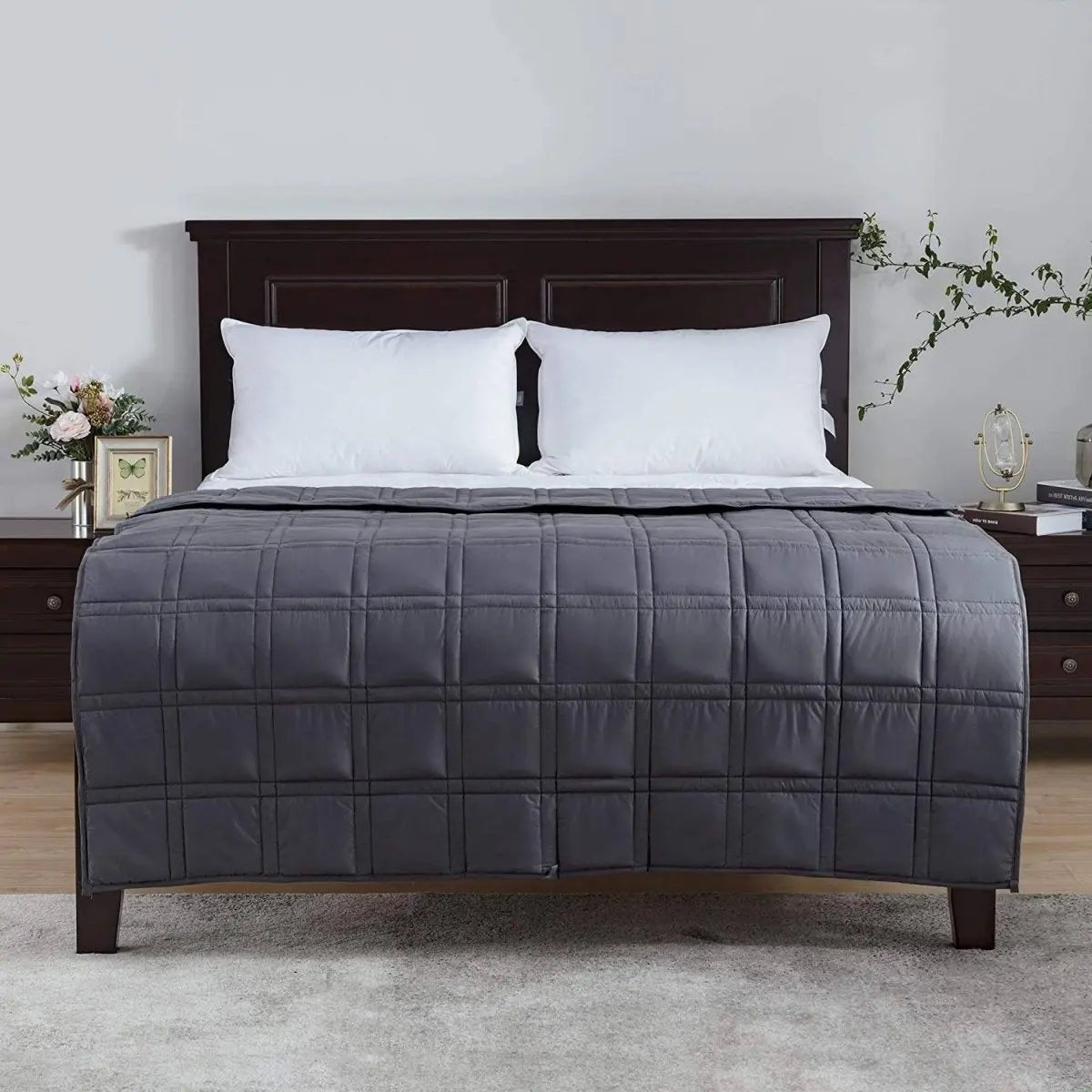





Comment créer un sanctuaire du sommeil chez soi
Votre chambre peut être magnifique et pourtant nuire à votre sommeil. Une lumière trop vive la nuit, des draps qui retiennent la chaleur, un désordre visuel sur la table de nuit, ou un matelas qui ne soutient plus votre corps peuvent silencieusement maintenir votre système nerveux en alerte. Si vous vous êtes demandé comment créer un sanctuaire du sommeil, la réponse réside moins dans la décoration et plus dans la création d'un environnement qui aide votre corps à se détendre.
Un véritable sanctuaire du sommeil procure une sensation de calme avant même que vous ne vous mettiez au lit. Il favorise le repos par la lumière, la température, la texture et la routine. L'objectif n'est pas la perfection. Il s'agit de façonner un espace qui signale la sécurité, le confort et la cohérence, surtout si le stress, la surstimulation ou un sommeil agité font désormais partie de vos soirées.
Comment créer un sanctuaire du sommeil qui favorise réellement le repos
Les chambres les plus efficaces réduisent les frictions. Elles facilitent la détente, assurent le confort pendant la nuit et permettent de se réveiller moins épuisé. Cela commence généralement par l'élimination de ce qui maintient la pièce active et l'ajout de ce qui procure un sentiment d'ancrage.
Pour certaines personnes, cela signifie se concentrer sur le confort sensoriel. Pour d'autres, cela implique de réguler la température ou de réduire le bruit visuel. Si vos problèmes de sommeil sont liés à l'anxiété, votre sanctuaire aura peut-être besoin de plus de douceur et de poids. Si vous avez tendance à avoir chaud, les couches respirantes sont plus importantes que le style lourd. Une meilleure chambre est personnelle, mais les principes sont cohérents.
Commencez par ce que votre corps remarque en premier
Votre corps réagit à la chambre bien avant que votre esprit ne se détende complètement. C'est pourquoi la première couche de changement doit être physique et immédiate.
Commencez par une literie qui vous aide à maintenir une température confortable. La surchauffe est l'une des raisons les plus courantes pour lesquelles les gens se tournent, se réveillent et sortent une jambe de sous les couvertures à 2 heures du matin. Si cela vous semble familier, des couches plus légères et des tissus respirants peuvent faire une différence notable. La literie à base de bambou, les draps rafraîchissants et les matériaux qui évacuent l'humidité ont tendance à procurer une sensation plus douce sur la peau et à être plus adaptables selon les saisons.
Si votre système nerveux est très actif la nuit, la pression peut être tout aussi importante que la température. Une couverture lestée, un masque de sommeil lesté ou une autre couche sensorielle douce peut aider à créer cette sensation d'ancrage et de maintien dont beaucoup de gens ont besoin pour s'apaiser. Le poids idéal doit être rassurant, pas restrictif. C'est un confort de soutien, pas de la lourdeur pour la lourdeur.
Faites en sorte que le lit soit intentionnel, et non surchargé
Un sanctuaire du sommeil doit être invitant, pas compliqué. Empiler des oreillers décoratifs, des plaids et des couches supplémentaires peut sembler élégant sur les photos, mais trop d'efforts au moment du coucher peuvent interrompre le sentiment de facilité que vous essayez de créer.
Au lieu de cela, gardez le lit simple et tactile. Choisissez quelques couches qui servent chacune un but : un matelas ou un surmatelas de soutien, des draps respirants, une couche de confort qui correspond à votre température de sommeil, et un élément d'ancrage si cela vous aide à vous détendre. Les taies d'oreiller en soie peuvent ajouter une sensation plus douce et plus fraîche. Un surmatelas peut adoucir les points de pression sans nécessiter un remplacement complet du matelas. Les petites améliorations ont souvent un impact plus important qu'une rénovation complète de la chambre.
Il y a aussi un compromis pratique ici. Si vous partagez un lit et dormez différemment de votre partenaire, une configuration parfaite peut ne pas exister. Dans ce cas, pensez par zones. Des poids de couverture différents, des hauteurs d'oreiller différentes ou des couches supérieures personnalisées peuvent aider les deux personnes à mieux dormir sans forcer la même solution sur chaque corps.
La lumière change tout dans un sanctuaire du sommeil
L'une des façons les plus rapides d'améliorer votre chambre est d'adoucir ce que vous voyez la nuit. Une lumière vive au plafond indique au cerveau de rester vigilant. Un éclairage plus chaud et plus tamisé fait le contraire.
Si possible, remplacez les ampoules blanches vives par des tons plus chauds et utilisez l'éclairage de chevet le soir plutôt que le plafonnier. Votre chambre devrait être plus calme après le coucher du soleil, même avant que vous ne fermiez les yeux. Les rideaux occultants peuvent également aider si les lampadaires ou le soleil du matin ont tendance à interrompre votre sommeil.
Les écrans méritent d'être honnêtes ici. La plupart des gens savent que les téléphones sont stimulants, mais une règle stricte « pas de téléphone » n'est pas réaliste pour tout le monde. Une meilleure approche consiste à réduire leur présence. Chargez les appareils plus loin du lit, baissez la luminosité et évitez de transformer votre oreiller en deuxième bureau. Si votre chambre porte toujours l'énergie d'un travail inachevé, votre corps continuera de l'interpréter ainsi.
Dégagez les surfaces sur lesquelles vos yeux se posent constamment
Le désordre visuel est plus important que ce que l'on pense. Une commode encombrée, une pile de linge ou une pile de colis non ouverts peuvent créer un bruit mental de faible intensité. Vous ne vous concentrez peut-être pas consciemment sur ces choses, mais votre cerveau les enregistre toujours.
Cela ne signifie pas que votre chambre doit avoir l'air minimaliste ou chère. Elle a juste besoin de se sentir apaisée. Dégagez votre table de nuit, à l'exception de ce qui soutient votre routine du soir. Rangez les choses qui vous rappellent les tâches ménagères. Gardez les textures douces, les couleurs discrètes et les surfaces faciles à entretenir. Lorsque la pièce est soignée, il devient plus facile de se laisser aller à l'intérieur.
Comment créer un sanctuaire du sommeil avec de meilleurs signaux sensoriels
Les espaces de sommeil les plus efficaces sont cohérents. Lorsque votre chambre sent, ressent et fonctionne de la même manière chaque nuit, votre cerveau commence à l'associer au repos.
C'est là que les signaux sensoriels peuvent aider. Une couverture lestée pliée au pied du lit, une brume d'oreiller familière, une literie douce que vous attendez avec impatience, ou un masque de sommeil que vous utilisez chaque nuit peuvent tous devenir des signaux que le sommeil approche. Ces signaux sont particulièrement utiles pour les personnes qui se sentent excitées tard le soir ou qui ont du mal à sortir d'un état mental occupé.
Restez simple. Vous n'avez pas besoin d'une longue routine du coucher avec dix produits de bien-être pour créer le calme. Un ou deux signaux fiables répétés chaque nuit fonctionnent souvent mieux qu'un système élaboré que vous ne pouvez pas maintenir.
La température doit être facile à gérer
De nombreuses chambres échouent parce qu'elles ne sont pas adaptables. La pièce est agréable au coucher, puis trop chaude à minuit et trop fraîche le matin. La superposition de couches résout plus de problèmes que l'engagement envers une seule couverture lourde toute l'année.
Essayez de préparer votre lit comme vous vous habilleriez pour les changements climatiques. Utilisez des draps respirants comme base, puis ajoutez des couches que vous pouvez ajuster facilement. C'est là que les systèmes toutes saisons ont tendance à bien fonctionner. Ils vous permettent de rester confortable sans avoir à changer constamment toute votre configuration.
Si vous dormez avec un partenaire, la flexibilité est encore plus importante. Une personne peut vouloir une literie rafraîchissante tandis que l'autre préfère plus de poids et de chaleur. Un sanctuaire du sommeil devrait soutenir la vie réelle, et non forcer une symétrie parfaite.
Protégez la pièce du stress diurne
Si votre chambre sert également de bureau, de débordement de crèche ou de zone de rangement fourre-tout, le sommeil doit rivaliser avec tout ce qui s'y passe. Parfois, c'est inévitable. Mais même dans ce cas, de petites limites aident.
Rangez les outils de travail à la fin de la journée. Utilisez des paniers ou des tiroirs pour contenir le désordre visuel. Évitez que le lit ne devienne votre espace de travail par défaut. Plus votre chambre est clairement associée au repos, plus il est facile pour votre corps de suivre.
Cela est encore plus important pendant les périodes stressantes. Lorsque la vie semble mentalement bruyante, votre chambre ne devrait pas ajouter au bruit. Elle devrait offrir un lieu d'atterrissage plus calme.
Investissez là où le rendement est quotidien
Tous les aménagements de chambre ne méritent pas votre budget. Commencez par ce qui touche votre corps pendant des heures. Les draps, les couvertures, les oreillers, les surmatelas et les masques de sommeil affectent directement le confort et la récupération. Les accents décoratifs le font rarement.
C'est pourquoi une couverture lestée ou une literie rafraîchissante choisie avec soin apporte souvent plus de valeur qu'un réaménagement complet de la pièce. Better Sleep a bâti sa collection autour de cette idée : un confort pratique, des matériaux de qualité supérieure et un soutien thérapeutique qui s'intègre aux routines réelles. Lorsqu'un produit est conçu pour vous aider à calmer vos nuits, vous en ressentez la différence là où ça compte.
Il n'est pas nécessaire de tout changer en même temps. Choisissez un problème à résoudre en premier. Si vous vous réveillez avec chaud, commencez par une literie respirante. Si vous vous sentez agité, ajoutez un poids léger. Si votre chambre est trop stimulante, adoucissez l'éclairage et dégagez les surfaces. Les sanctuaires du sommeil sont généralement construits par couches, tout comme les bons lits.
La chambre la plus reposante n'est pas la plus stylée. C'est celle qui vous aide à vous sentir en sécurité, confortable et prêt à laisser la journée se terminer.


Laissez un commentaire