






Comment les couvertures lestées réduisent le stress
Le stress se manifeste rarement poliment. Il apparaît sous forme d'épaules tendues à 22 h, d'un esprit qui ressasse la liste des choses à faire pour le lendemain, ou de la sensation familière d'être fatigué mais incapable de se détendre. C'est là que comprendre comment les couvertures lestées réduisent le stress devient réellement utile – non pas comme une tendance, mais comme un moyen pratique d'aider le corps à ralentir.
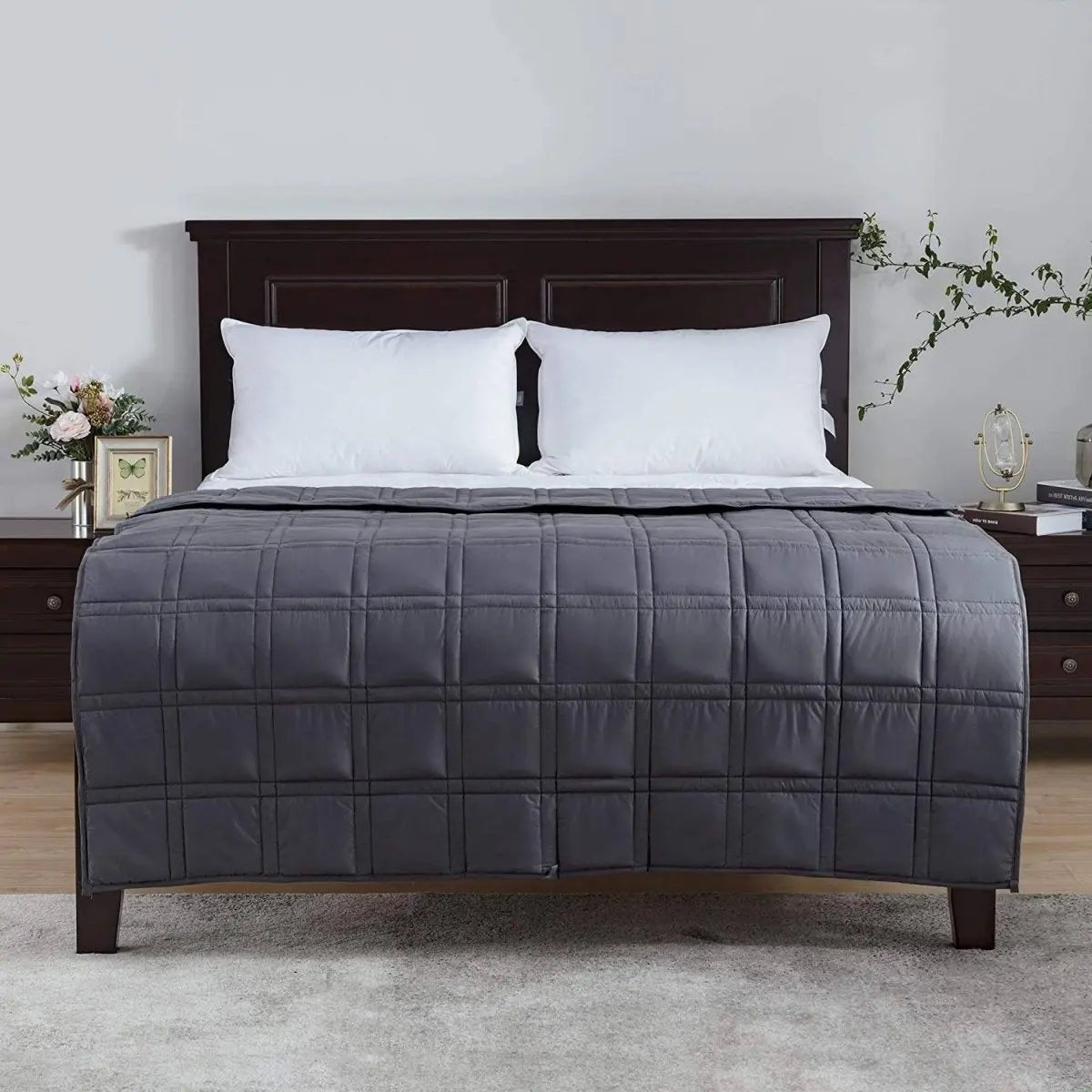
Une couverture lestée bien conçue applique une pression douce et uniforme sur le corps. Cette sensation est souvent comparée à un câlin ferme et réconfortant. Pour de nombreuses personnes, cette pression crée un sentiment immédiat d'ancrage. La pièce n'a pas changé, le programme n'a pas changé, mais le corps commence à se sentir plus en sécurité et plus apaisé à l'intérieur.
Comment les couvertures lestées réduisent le stress dans le corps
L'idée fondamentale est simple. Les couvertures lestées utilisent la pression tactile profonde, un type de pression constante qui peut aider le système nerveux à sortir d'un état d'excitation et de réactivité. Lorsque le stress est élevé, le corps a tendance à rester en alerte. La fréquence cardiaque peut sembler élevée, les muscles restent tendus et le sommeil devient plus léger ou plus difficile à atteindre.
Une pression douce peut interrompre une partie de cette surstimulation. Beaucoup de gens remarquent qu'ils respirent plus lentement, bougent moins et se sentent plus présents sous une couverture lestée. Au lieu de se sentir dispersés, ils se sentent soutenus. Ce changement est important car le stress n'est pas seulement mental. Il est physique, et le corps a souvent besoin de soutien avant que l'esprit ne puisse suivre pleinement.
C'est l'une des raisons pour lesquelles les couvertures lestées sont si souvent associées à des soirées plus calmes et à un meilleur repos. Elles ne forcent pas le sommeil. Elles aident à créer des conditions qui semblent plus sûres, plus calmes et moins activantes.
Le rôle de la pression tactile profonde
La pression tactile profonde est souvent utilisée dans les contextes thérapeutiques car elle peut avoir un effet organisateur sur les sens. Si votre journée a été remplie de bruit, d'écrans, de multitâche ou de tension émotionnelle, le système nerveux peut rester dans un état de sur-préparation. Même lorsque vous vous allongez enfin, votre corps peut ne pas comprendre qu'il est temps de se reposer.
Une couverture lestée transmet ce message plus clairement. La pression est constante, non stimulante. Contrairement à un téléphone, à la télévision ou même à une conversation de fond, elle ne vous demande rien. Elle crée simplement un signal physique constant qui peut aider à réduire le sentiment de chaos interne.
Pour les adultes qui gèrent le stress lié au travail, la fatigue parentale ou l'anxiété au coucher, cela peut être particulièrement réconfortant. C'est un outil discret, mais souvent efficace.
Pourquoi certaines personnes se sentent plus calmes presque immédiatement
Il y a une raison pour laquelle les gens décrivent souvent les couvertures lestées en termes émotionnels. Elles ne font pas que réchauffer. Elles réconfortent. Cette différence est importante.
La sensation d'être doucement enveloppé peut réduire l'envie de se retourner, de s'ajuster et de rester mentalement sur ses gardes. Pour certains, cela signifie s'endormir plus rapidement. Pour d'autres, cela signifie moins de réveils causés par l'agitation ou la tension. Même en dehors du sommeil – en lisant, en se reposant après le travail ou en se décompressant après un voyage – la pression peut aider à marquer une transition entre une forte activité et le repos.
Cet effet calmant immédiat varie d'une personne à l'autre. Certaines personnes apprécient immédiatement la sensation. D'autres ont besoin de quelques nuits pour s'adapter. Si une personne est très sensible à la chaleur, à la répartition du poids ou aux sensations d'enfermement, la conception de la couverture est très importante. Les matériaux respirants et le remplissage équilibré peuvent faire la différence entre apaisement et inconfort.
Le soulagement du stress n'est pas une solution universelle
Les couvertures lestées peuvent être utiles, mais elles ne sont pas universelles. Une couverture trop lourde peut être ressentie comme restrictive au lieu d'être apaisante. Une couverture avec une mauvaise circulation de l'air peut ajouter un inconfort physique, surtout pour les personnes qui ont chaud en dormant. Et si le stress est lié à la douleur, à un traumatisme ou à une condition médicale, une couverture lestée ne peut être qu'une partie d'un plan de soutien plus vaste.
Il est important de garder cette nuance à l'esprit. L'objectif n'est pas l'intensité. L'objectif est la réassurance.
Comment les couvertures lestées réduisent le stress au moment du coucher
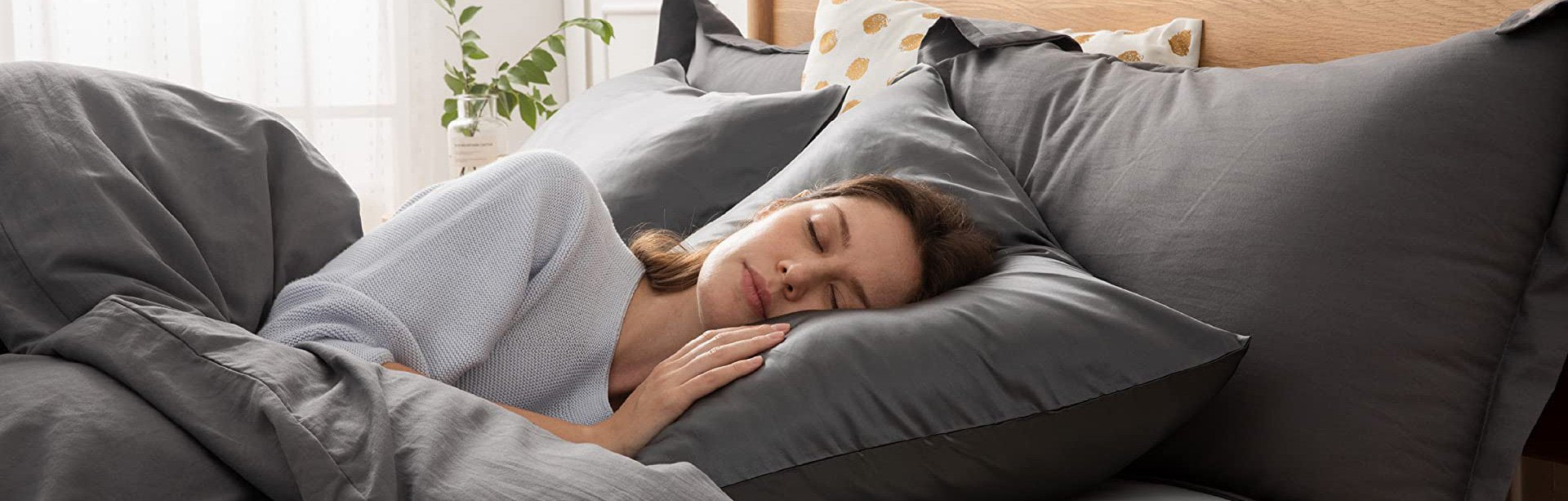
Le coucher est souvent le moment où le stress non traité se fait le plus sentir. Pendant la journée, il y a des distractions. La nuit, il y a de l'espace pour remarquer chaque tâche inachevée, chaque souci, chaque sensation physique. C'est pourquoi tant de gens disent qu'ils sont épuisés mais qu'ils ne peuvent toujours pas se détendre.
Une couverture lestée peut aider à créer un rituel de détente plus distinct. Dès qu'elle est placée sur le corps, il y a un signal sensoriel que la partie active de la journée se termine. Au fil du temps, cela peut faire partie d'une routine de sommeil fiable. Le corps commence à reconnaître la séquence – lumières tamisées, respiration plus calme, couverture posée, système nerveux ralentissant.
Ce type de cohérence est particulièrement utile pour les personnes qui luttent contre la suractivité mentale la nuit. Vous ne pouvez peut-être pas vous forcer à dormir par la pensée, mais vous pouvez façonner un environnement qui favorise le sommeil plus naturellement.
C'est aussi là que la qualité compte. Une couverture conçue pour un confort toute l'année est beaucoup plus susceptible de devenir une habitude nocturne qu'une couverture qui semble étouffante ou trop dense. Les matériaux de première qualité, les coutures soignées et les tissus respirants ne sont pas des détails décoratifs. Ils affectent directement la durabilité des bienfaits du soulagement du stress.
Le lien entre la réduction du stress et un meilleur sommeil
Le stress et le sommeil ont une relation circulaire. Lorsque le stress est élevé, le sommeil a tendance à en pâtir. Et lorsque le sommeil en pâtit, le stress devient plus difficile à réguler le lendemain.
Les couvertures lestées peuvent aider à interrompre ce cycle en s'attaquant à l'agitation physique qui empêche souvent les gens de dormir. Moins de tension au coucher peut entraîner un sommeil plus réparateur. Un sommeil plus réparateur peut améliorer la patience, la concentration, l'humeur et la résilience le lendemain. La couverture elle-même ne fait pas tout, bien sûr, mais elle peut soutenir un modèle plus réparateur.
Pour beaucoup de gens, c'est la véritable valeur. Pas une solution miracle du jour au lendemain, mais une source de calme fiable qui aide les nuits à sembler moins pénibles.
Qui en tire le plus de bénéfices
Les adultes ayant des horaires chargés, les personnes anxieuses et celles qui se sentent surstimulées en fin de journée sont souvent de bons candidats. Les parents trouvent parfois les couvertures lestées utiles pour les enfants dans le cadre d'une routine de sommeil adaptée aux sens, bien que l'ajustement et la sécurité doivent toujours être examinés attentivement. Les acheteurs de cadeaux sont souvent attirés par elles pour la même raison : elles offrent un confort tangible, utile et durable.
Les personnes qui ont tendance à avoir froid en dormant peuvent apprécier le confort supplémentaire, tandis que les personnes qui ont chaud devraient prêter une attention particulière au choix du tissu. Le bambou, le coton et d'autres matériaux respirants sont souvent plus confortables pour une utilisation toute l'année.
Choisir une couverture qui procure vraiment un sentiment d'apaisement
Si vous vous intéressez à la façon dont les couvertures lestées réduisent le stress, choisir la bonne fait partie de la solution. Le poids, le tissu et la sensation générale façonnent l'expérience.
La plupart des gens se sentent mieux avec une couverture qui leur procure une sensation de sécurité sans être trop lourde. La répartition uniforme du poids est importante, car les bosses ou le déplacement du remplissage peuvent créer une distraction plutôt que du calme. La respirabilité est tout aussi importante. Une couverture anti-stress devrait vous aider à vous détendre, et non pas vous donner l'impression d'être piégé par la chaleur.
La texture joue également un rôle. Des matériaux doux et agréables au toucher peuvent rendre l'expérience plus apaisante dès la première utilisation. Si une couverture est belle mais qu'elle est rigide, bruyante ou trop chaude, il y a moins de chances qu'elle s'intègre à votre rythme nocturne.
C'est là qu'une option conçue avec soin peut se distinguer. Better Sleep se concentre sur les couvertures lestées et la literie de première qualité conçues pour favoriser un sommeil plus profond, des nuits plus calmes et un confort toute l'année – ce dont les personnes stressées ont le plus besoin.
À quoi s'attendre les premières nuits
Une couverture lestée doit procurer un sentiment d'apaisement, et non de surprise. Si vous débutez, commencez par l'utiliser pendant une courte période de repos avant le coucher. Lisez sous elle, regardez quelque chose de calme ou restez simplement immobile pendant quelques minutes. Cela donne à votre corps une chance de s'adapter sans la pression de s'endormir immédiatement.
Certaines personnes remarquent une différence dès la première nuit. D'autres ont besoin d'une semaine d'utilisation constante avant que la routine ne s'installe. C'est normal. Les habitudes de stress se développent avec le temps, et les habitudes apaisantes aussi, souvent.
Si la couverture vous semble inconfortable, trop chaude ou trop lourde, écoutez cette réaction. La bonne couverture devrait vous aider à expirer un peu plus facilement. Elle ne devrait pas donner l'impression que vous devez la tolérer.
Une couverture lestée n'effacera pas toutes les journées difficiles. Mais elle peut devenir l'un des rares moments de la journée qui ne vous demande rien. Juste le calme, la pression et un peu plus de facilité quand vous en avez le plus besoin.

Laissez un commentaire