


Les couvertures rafraîchissantes peuvent-elles aider les sueurs nocturnes ?
Se réveiller en sueur à 2 heures du matin peut rendre même une longue nuit au lit agitée. Si vous vous êtes demandé si les couvertures rafraîchissantes peuvent aider à gérer les sueurs nocturnes, la réponse courte est oui, mais seulement si la couverture est conçue pour libérer la chaleur et l'humidité au lieu de les emprisonner.
Les sueurs nocturnes ne sont pas seulement une question de sensation de chaleur. Elles impliquent souvent un mélange de changements de température corporelle, d'humidité, de couches de literie et de choix de tissus qui retiennent la chaleur près de la peau. Une couverture rafraîchissante peut créer un environnement de sommeil plus confortable, mais c'est rarement une solution complète à elle seule. La vraie différence vient de l'adéquation de la bonne couverture à la raison pour laquelle vous avez trop chaud.
Les couvertures rafraîchissantes peuvent-elles aider à gérer les sueurs nocturnes, ou est-ce du marketing ?
Elles peuvent aider, et pour de nombreux dormeurs, elles aident de manière significative. La clé est de comprendre ce qu'une couverture rafraîchissante fait réellement.
Une vraie couverture rafraîchissante ne rend pas votre corps froid. Au lieu de cela, elle est conçue pour améliorer la respirabilité, favoriser la circulation de l'air et évacuer l'humidité de la peau. C'est important parce que les sueurs nocturnes sont pires lorsque la sueur est emprisonnée entre votre corps, vos vêtements de nuit et votre literie. Une fois que cette humidité s'y installe, votre sommeil peut passer très rapidement de la surchauffe à la moiteur.
Les couvertures rafraîchissantes fonctionnent mieux pour les personnes qui ont tendance à avoir chaud en dormant, qui souffrent de sueurs nocturnes légères à modérées, ou qui se sentent mal à l'aise sous une literie plus épaisse. Si votre couverture actuelle est dense, synthétique ou trop isolante, passer à une option plus légère et plus respirante peut réduire cette sensation de chaleur emprisonnée presque immédiatement.
Cela dit, il y a une limite. Si vos sueurs nocturnes sont sévères, soudaines ou liées à un problème médical, aucune couverture ne peut résoudre la cause sous-jacente. Dans ces cas, considérez une couverture rafraîchissante comme un outil de confort plutôt qu'un traitement.
Pourquoi les sueurs nocturnes apparaissent-elles ?
Les sueurs nocturnes peuvent apparaître pour différentes raisons, et c'est pourquoi les résultats varient d'une personne à l'autre.
Pour certains, le problème est une simple surchauffe. Une chambre chaude, une couette épaisse, un matelas en mousse à mémoire de forme ou un pyjama non respirant peuvent créer une poche de chaleur autour du corps. Dans ce cas, une couverture rafraîchissante peut être d'une grande aide car la literie elle-même fait partie du problème.
Pour d'autres, les sueurs nocturnes sont liées au stress, aux changements hormonaux, aux effets secondaires de médicaments, à une maladie ou aux changements de glycémie. Vous pouvez toujours bénéficier d'une literie plus fraîche, mais la transpiration peut continuer parce que votre corps réagit à quelque chose de plus profond que la température ambiante.
C'est là qu'une approche calme et réaliste est importante. Une meilleure literie peut favoriser un meilleur sommeil, naturellement, mais elle ne doit pas être présentée comme une panacée.
Qu'est-ce qui rend une couverture rafraîchissante efficace ?
Le matériau est la première chose à considérer. Si une couverture est commercialisée comme rafraîchissante mais utilise du polyester dense ou des couches douces qui retiennent la chaleur, l'expérience peut ne pas sembler rafraîchissante du tout.
Les couvertures rafraîchissantes les plus efficaces reposent généralement sur des tissus respirants et régulant l'humidité. Les tissus dérivés du bambou en sont un excellent exemple car ils ont tendance à être doux, légers et moins rétenteurs de chaleur que de nombreuses options synthétiques traditionnelles. Le coton peut également bien fonctionner, surtout dans des tissages plus légers. L'objectif n'est pas seulement la douceur. L'objectif est la circulation de l'air.
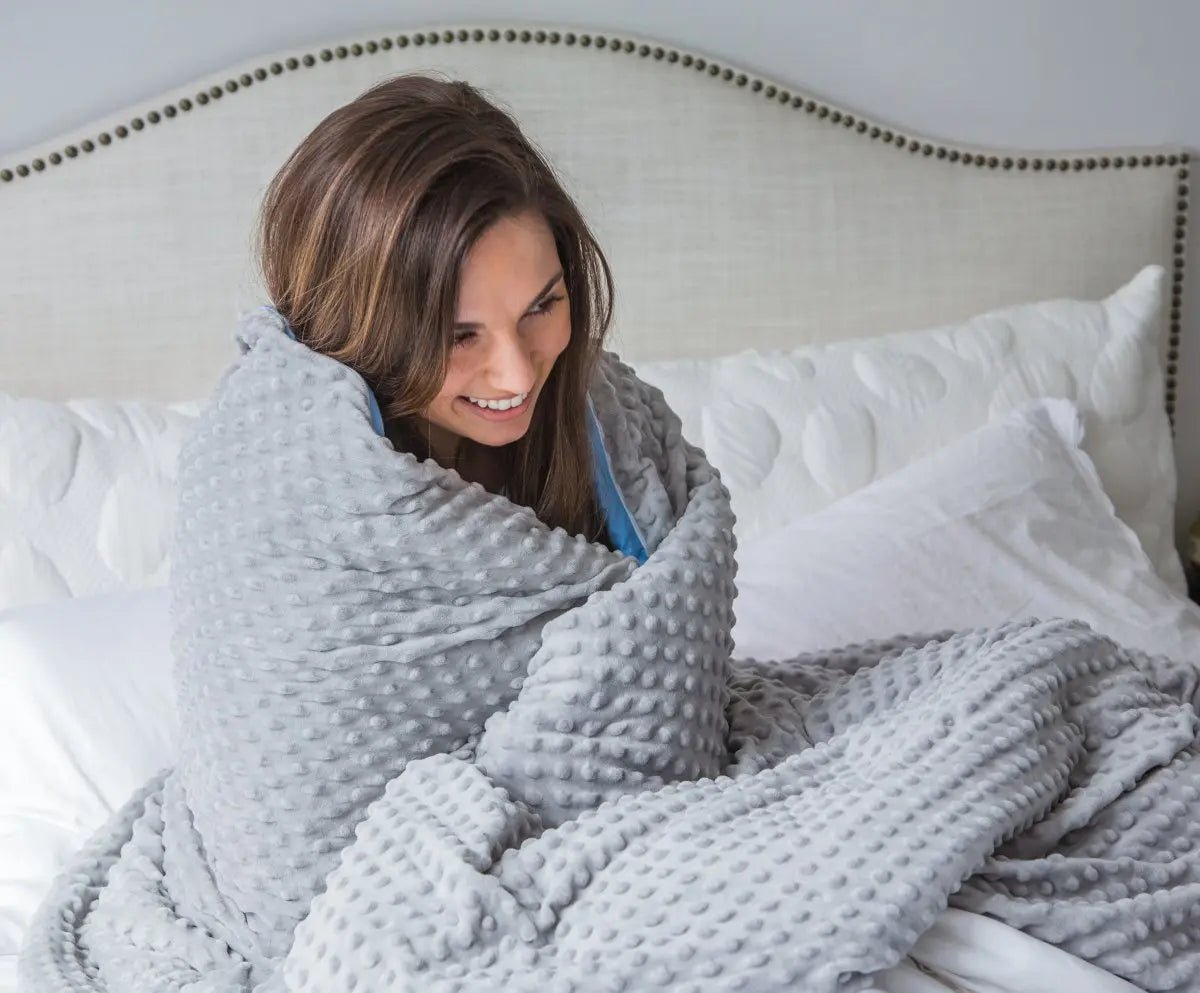
Le poids compte aussi. Beaucoup de personnes souffrant de sueurs nocturnes pensent qu'elles doivent dormir sans couverture, mais souvent, la meilleure solution est d'utiliser une couverture plus légère qui procure tout de même du confort sans excès d'isolation. Certains dormeurs se reposent mieux avec une légère sensation de couverture, surtout si le stress ou la sensibilité sensorielle font partie du problème. Dans ce cas, la bonne couverture rafraîchissante peut offrir une expérience de sommeil plus équilibrée.
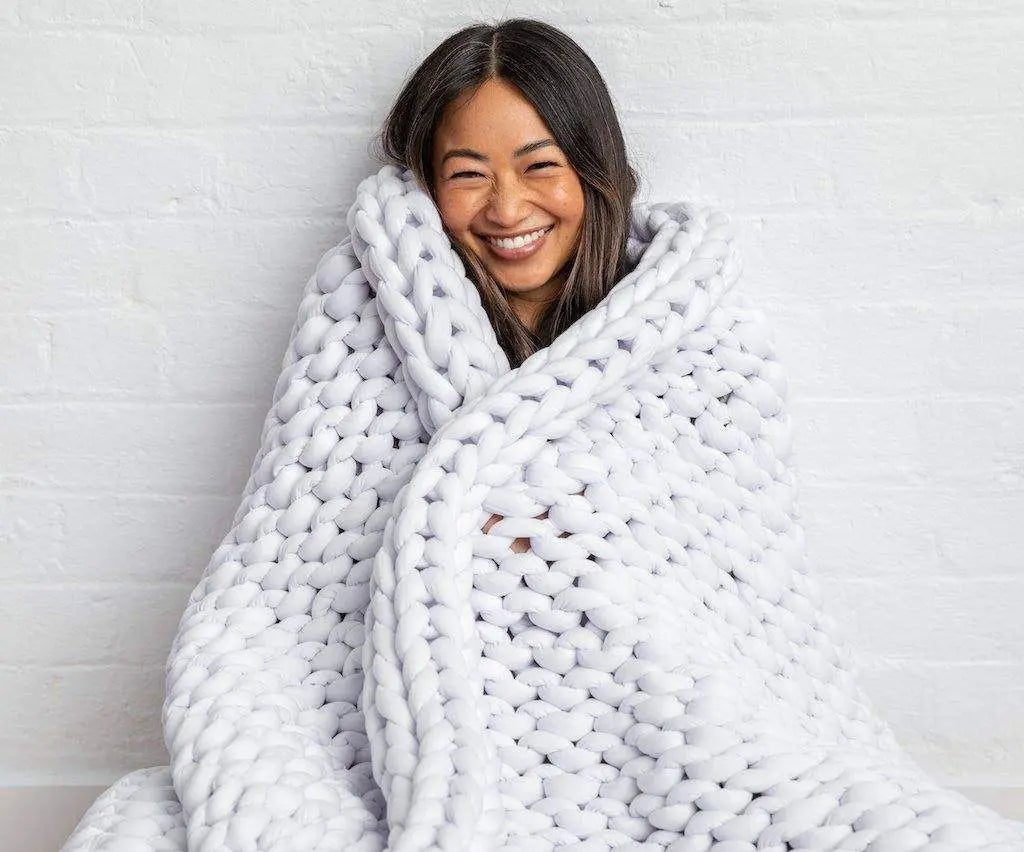
La construction joue également un rôle. Les tissages plus lâches, les fibres thermorégulatrices et les tissus qui évacuent l'humidité du corps ont tendance à mieux fonctionner que les matériaux très compacts qui retiennent la chaleur.
Quand les couvertures rafraîchissantes sont-elles les plus utiles ?
Les couvertures rafraîchissantes ont tendance à être particulièrement utiles lorsque votre inconfort provient de votre environnement de sommeil plutôt que de votre seule santé.
Si vous avez chaud toute l'année en dormant, partagez votre lit avec quelqu'un qui préfère plus de couches, ou vous réveillez en sueur sous une couette qui vous semble trop lourde, une couverture rafraîchissante peut rendre vos nuits moins interrompues. Elle peut également aider si vous souhaitez superposer votre lit de manière plus intentionnelle, par exemple en utilisant des draps respirants et une couche supérieure plus légère au lieu d'une seule couverture épaisse qui ne fait rien de bien.
Les personnes vivant dans des climats plus chauds ou des chambres chauffées remarquent souvent le bénéfice plus rapidement. Il en va de même pour celles qui sont sensibles à la texture. Une couverture fraîche, lisse et sèche au toucher peut réduire cette sensation d'agitation et de surstimulation qui accompagne parfois la surchauffe.
Pour les personnes traversant des changements hormonaux, le bénéfice est souvent plus modéré. Une couverture rafraîchissante ne peut pas arrêter les fluctuations de température, mais elle peut réduire leur intensité et leur durée lorsqu'elles se produisent.
Quand une couverture rafraîchissante peut ne pas suffire
Il y a des nuits où la couverture n'est qu'une partie de l'histoire.
Si votre matelas retient la chaleur, vos draps sont synthétiques, votre chambre est trop chaude et vos vêtements de nuit sont épais, même la meilleure couverture rafraîchissante travaillera à contre-courant du reste de votre environnement. La température de sommeil est stratifiée, et un produit respirant ne peut pas compenser entièrement plusieurs produits qui retiennent la chaleur.
Il est également utile de prêter attention aux changements dans votre corps. Si les sueurs nocturnes ont commencé soudainement, sont devenues fréquentes ou vous font tremper vos vêtements et votre literie, il est judicieux de consulter un professionnel de la santé. Une literie axée sur le confort peut toujours favoriser votre sommeil, mais des sueurs nocturnes persistantes méritent un examen plus approfondi.
Comment choisir la bonne couverture rafraîchissante pour les sueurs nocturnes
Commencez par le tissu. Privilégiez les matériaux respirants connus pour leur circulation d'air et leur gestion de l'humidité. Le bambou est souvent un excellent choix pour les personnes qui ont chaud car il est frais au toucher et a tendance à rester confortable toute la nuit.
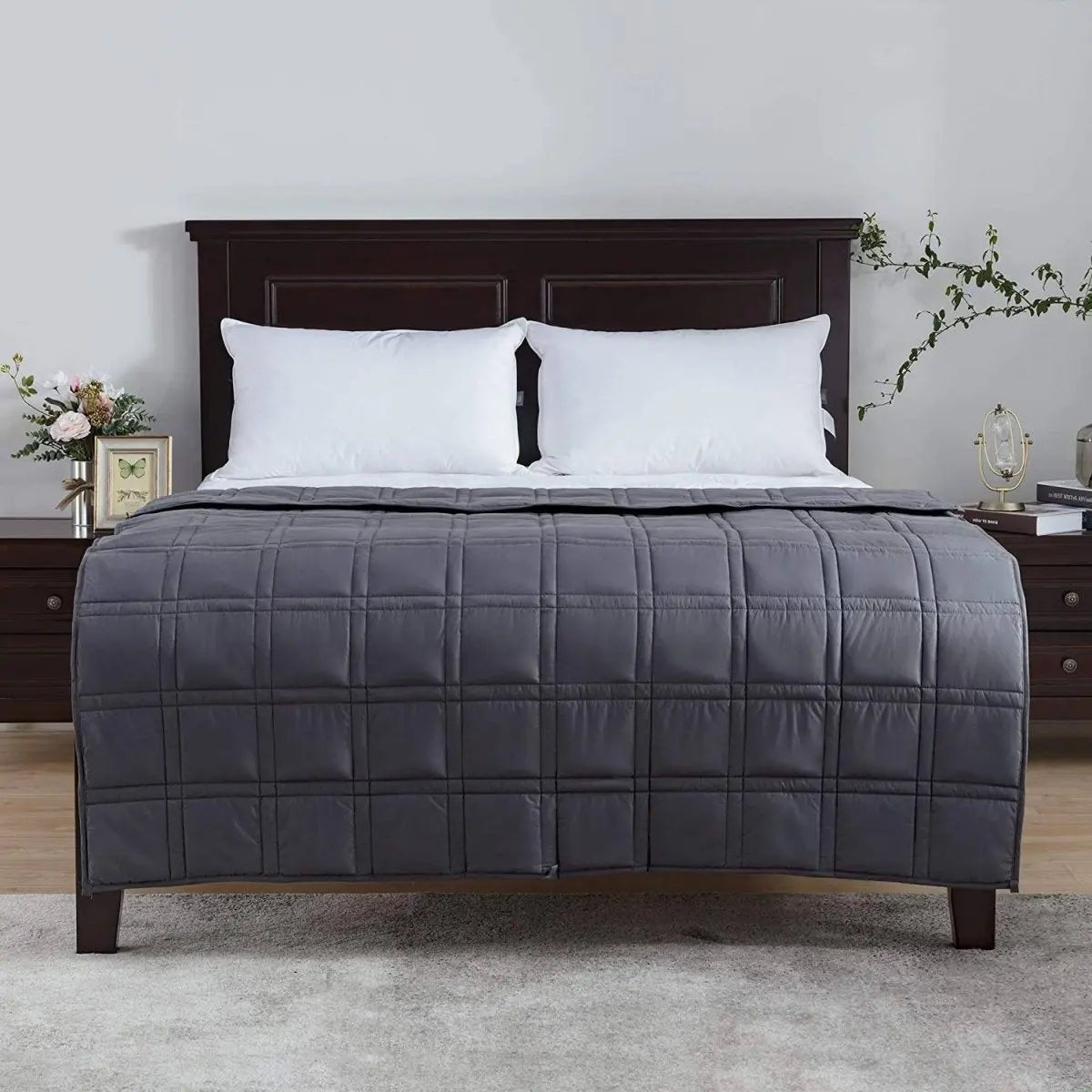
Ensuite, considérez le poids. Plus lourd ne signifie pas toujours mieux, surtout si la surchauffe est votre principale plainte. Si vous aimez la sensation apaisante de la pression, recherchez une option spécialement conçue pour équilibrer confort et respirabilité plutôt qu'une couverture principalement conçue pour la chaleur.
La taille est plus importante que ce que les gens pensent. Une couverture trop grande peut se tasser, se plier et retenir la chaleur autour du corps. Une taille plus proportionnée peut aider la couverture à mieux draper et permettre une circulation d'air plus constante.
Vous devriez également penser à l'entretien. Les sueurs nocturnes signifient que votre literie doit être lavée régulièrement. Une couverture facile à entretenir sera bien plus pratique qu'une couverture qui semble exigeante après quelques utilisations.
Construisez un système de sommeil plus frais, pas seulement une couverture plus fraîche
Si vous voulez les meilleurs résultats, traitez votre couverture comme faisant partie d'un environnement de sommeil complet.
Associez-la à des draps respirants, idéalement en bambou ou en coton léger. Choisissez des vêtements de nuit qui ne collent pas lorsqu'ils sont humides. Gardez votre chambre suffisamment fraîche pour que votre corps puisse s'endormir sans lutter contre la température ambiante. Si votre matelas est chaud, un surmatelas rafraîchissant ou un protège-matelas respirant peut aider à réduire la chaleur qui monte d'en bas.
C'est souvent là que les gens constatent le plus grand changement. Non pas parce qu'un produit fait un miracle, mais parce que chaque couche ne travaille plus contre les autres.
Pour certains dormeurs, cela signifie aussi reconsidérer l'idée que le confort doit rimer avec lourdeur. Le calme peut venir de la douceur, d'un poids léger et d'un équilibre thermique tout à la fois. C'est souvent la différence entre se réveiller à plusieurs reprises et dormir toute la nuit avec moins de perturbations.
Les couvertures rafraîchissantes en valent-elles la peine pour les sueurs nocturnes ?
Si votre literie actuelle vous fait transpirer, oui, elles en valent souvent la peine. Une bonne couverture rafraîchissante peut aider à réduire la chaleur emprisonnée, à évacuer l'humidité et à créer une surface de sommeil plus sèche et plus confortable. Cela ne peut pas éliminer tous les épisodes de sueurs nocturnes, mais cela peut rendre ces épisodes moins perturbateurs et plus faciles à gérer.
Les meilleurs résultats proviennent d'attentes réalistes. Les couvertures rafraîchissantes peuvent favoriser un meilleur repos, surtout lorsque l'accumulation de chaleur fait partie du problème. Elles sont moins efficaces en tant que solution autonome lorsque les sueurs nocturnes sont dues à des changements de santé ou hormonaux.
Pour de nombreuses personnes, cependant, ce soutien est significatif. Un meilleur sommeil ne concerne pas toujours des changements spectaculaires. Parfois, cela commence par une couverture plus légère, plus respirante, qui aide votre corps à se reposer au lieu de lutter.
Si vos nuits ont été chaudes, commencez par regarder ce qui est le plus proche de votre peau. Une couverture plus respirante peut être le léger changement qui aide votre chambre à retrouver son caractère réparateur.
Laissez un commentaire