






Housse de couette ou Couette : Que choisir
Si votre lit ne vous semble jamais tout à fait parfait – trop chaud, trop compliqué, trop plat, trop difficile à nettoyer – la question de la housse de couette par rapport à la couette importe plus qu'il n'y paraît. Le bon choix peut rendre votre chambre plus facile à entretenir et vos nuits nettement plus confortables.
Pour beaucoup de gens, la différence se résume à une chose : voulez-vous de la flexibilité ou de la simplicité ? Les deux peuvent créer un lit doux et accueillant, mais ils fonctionnent différemment au quotidien. L'un vous donne plus de contrôle sur la sensation, la chaleur et le lavage. L'autre est plus facile à prendre, à étaler et à oublier.
Housse de couette vs couette : la différence fondamentale
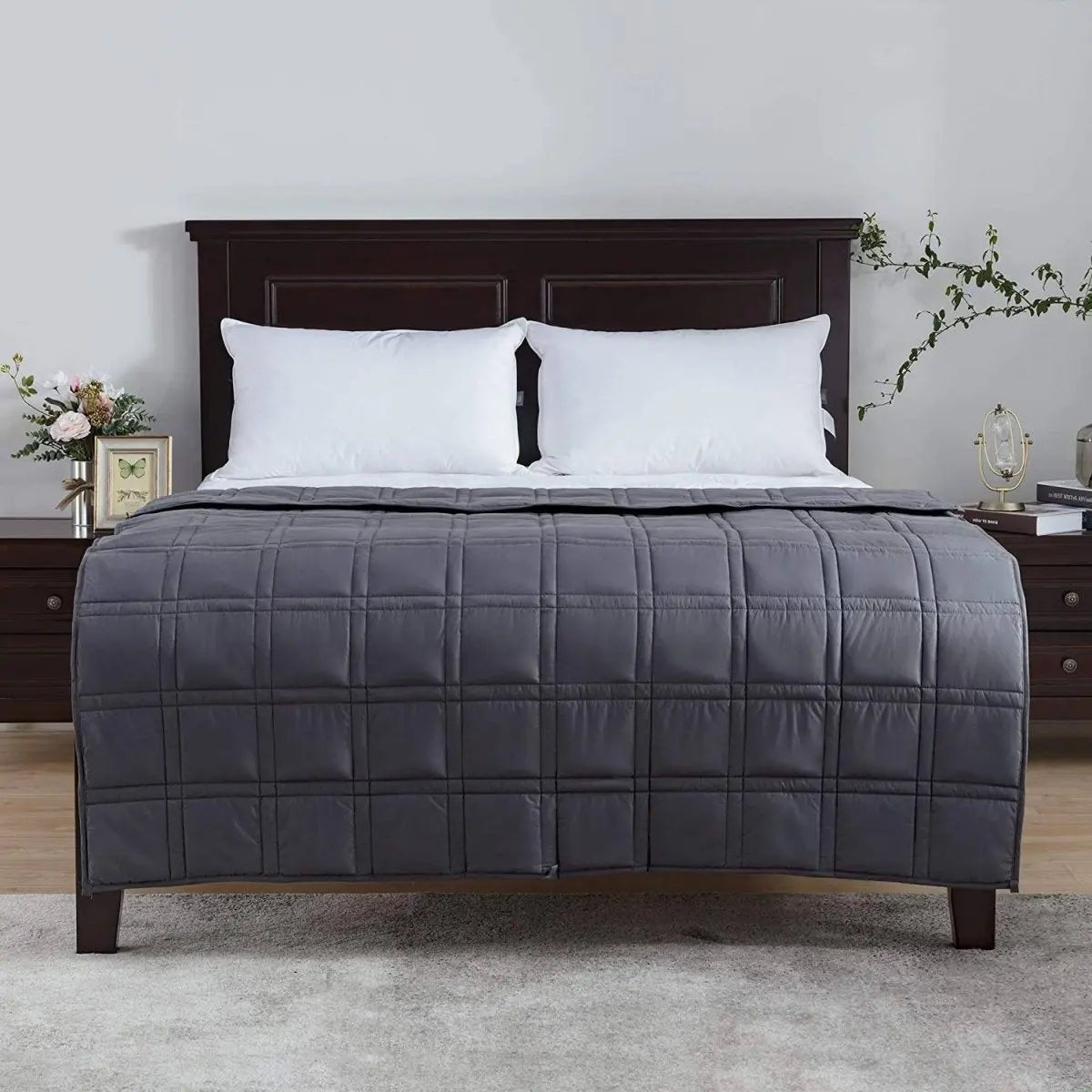
Une couette est une seule pièce de literie avec un garnissage cousu à l'intérieur et un tissu extérieur déjà attaché. Vous l'utilisez telle quelle. Une housse de couette est la couche extérieure amovible qui entoure un édredon, un peu comme une taie d'oreiller entoure un oreiller.
Cela semble simple, mais cela change toute l'expérience. Avec une couette, le tissu que vous voyez et le garnissage à l'intérieur sont un produit fini. Avec une installation de housse de couette, l'édredon fournit la chaleur et le gonflant, tandis que la housse vous donne le look et la partie qui touche votre peau le plus souvent.
Si vous aimez la literie à la fois élégante et pratique, cette différence est importante. Une housse de couette vous permet de rafraîchir l'apparence de votre lit ou de laver la couche extérieure sans nettoyer tout l'édredon à chaque fois.
Ce que chacun procure sur le lit
Une couette a généralement une sensation plus décontractée et prête à l'emploi. Parce que l'enveloppe et le garnissage sont cousus ensemble, elle a tendance à rester en place et à avoir un aspect uniforme d'un bord à l'autre. Pour les chambres d'amis, les appartements d'étudiants ou toute personne qui souhaite un lit qui se prépare en quelques secondes, cette facilité est attrayante.
Une couette avec une housse est souvent plus élégante et adaptable. L'édredon peut être moelleux et nuageux, tandis que la housse affecte la texture contre votre peau. Le coton frais est doux et propre. Le tissu dérivé du bambou a tendance à être plus lisse et plus respirant. Le lin a un aspect plus décontracté et aéré.
Il y a cependant un inconvénient. Certains édredons peuvent se déplacer à l'intérieur de la housse s'ils ne sont pas correctement fixés. Les liens et boucles aux coins aident, mais c'est un domaine où une couette peut sembler plus simple.
Chaleur et saisonnalité
Si vous avez chaud la nuit, la saisonnalité peut être plus importante que le style. Une couette vous offre un niveau de chaleur fixe. Cela peut bien fonctionner si la température de votre chambre reste assez constante toute l'année ou si vous savez déjà exactement quel poids vous préférez.
Une housse de couette vous offre plus d'options. Vous pouvez garder la même housse et changer l'édredon selon les saisons, en choisissant quelque chose de plus léger en été et de plus chaud en hiver. Cette flexibilité est particulièrement utile pour les couples ayant des besoins de confort changeants, les maisons avec des températures irrégulières ou toute personne sensible à la surchauffe.
C'est souvent là que la housse de couette commence à avoir plus de sens pour les acheteurs soucieux de leur bien-être. Un meilleur sommeil provient généralement d'une température corporelle stable, pas seulement de couches supplémentaires. Avoir la possibilité d'ajuster votre édredon sans remplacer tout l'aspect de votre lit peut rendre le repos plus personnalisé et moins aléatoire.
Lequel est le plus facile à laver ?
Pour la vie de tous les jours, c'est souvent le facteur décisif. Les couettes peuvent être plus difficiles à laver car la pièce entière doit passer à la machine. Si elle est surdimensionnée, très remplie ou délicate, le lavage à domicile peut sembler être un projet. Certaines personnes finissent par laver une couette moins souvent simplement parce que c'est peu pratique.
Une housse de couette est plus facile à garder fraîche car vous ne retirez et ne lavez que la couche extérieure. L'édredon a généralement besoin d'un nettoyage moins fréquent, surtout si la housse reste bien en place. Pour les personnes avec des animaux de compagnie, des enfants, des allergies ou une habitude de boire du thé au lit, cette couche de protection supplémentaire peut être un réel avantage.
L'inconvénient est que remettre une housse de couette peut prendre quelques minutes supplémentaires. Certaines personnes ne s'en soucient pas du tout. D'autres trouvent cela légèrement ennuyeux. Si vous préférez les routines à faible entretien avant tout, une couette peut toujours gagner.
Style, texture et aspect du lit
Une couette est généralement vendue avec un design fini à l'esprit. Cela peut être excellent si vous voulez un lit qui a l'air complet immédiatement. Vous choisissez la couleur, le motif ou le matelassage que vous aimez, et la décision visuelle est prise.
Une housse de couette offre plus de possibilités d'évolution. Si le style de votre chambre change avec les saisons ou si vous voulez un look plus calme et plus raffiné, changer de housse est plus facile et souvent plus économique que de remplacer une couette entière. Cela vous permet également de privilégier la performance des matériaux, pas seulement l'apparence.
Par exemple, si votre objectif est un lit frais, respirant et d'une structure douce, le tissu de la housse est très important. Une housse de couette bien faite peut créer une finition plus nette et plus intentionnelle tout en améliorant la sensation de votre literie nuit après nuit.
Housse de couette vs couette pour différents types de dormeurs
Si vous aimez un lit rapide à faire et facile à comprendre, une couette est un excellent choix. C'est également utile pour les enfants, les chambres d'amis ou toute personne qui ne veut pas avoir de pièces supplémentaires à gérer.
Si vous tenez à la lavabilité, à la flexibilité saisonnière et à un environnement de sommeil plus personnalisé, une housse de couette et un édredon ont généralement plus de sens. Cette configuration a tendance à particulièrement bien fonctionner pour les adultes qui aménagent une chambre axée sur le confort et le calme, et pas seulement sur l'apparence.
Les personnes qui ont chaud la nuit préfèrent souvent un système de couette car il permet un meilleur contrôle. Les personnes qui ont facilement froid peuvent également l'apprécier car elles peuvent choisir un édredon plus chaud sans sacrifier la douceur ou la respirabilité du tissu extérieur. Si vos besoins changent tout au long de l'année, la configuration de la couette a un net avantage.
Qu'en est-il du coût ?
À première vue, une couette peut sembler un achat plus simple car il s'agit d'un seul produit. Une housse de couette implique généralement l'achat de l'édredon et de la housse, de sorte que le coût initial peut être plus élevé.
Mais la valeur ne se limite pas au premier achat. Si vous pouvez laver la housse régulièrement, protéger l'édredon et ne changer qu'une partie de la configuration au fil du temps, une housse de couette peut devenir l'option la plus intelligente à long terme. Cela dépend de la façon dont vous utilisez votre literie et de la fréquence à laquelle vous aimez la rafraîchir.
Si votre priorité est la commodité immédiate avec un budget plus serré, une couette peut sembler plus pratique. Si votre priorité est la longévité, la flexibilité et une expérience de sommeil plus haut de gamme, une housse de couette gagne souvent sa place.
Quand une couette est le meilleur choix
Une couette fonctionne bien si vous voulez une literie simple dès le premier jour. Il n'y a pas d'édredon à aligner, pas de liens à attacher et pas de housse séparée à retirer. Pour un foyer occupé ou une chambre secondaire, cette facilité peut valoir beaucoup.
C'est également un bon choix si vous préférez nettement un aspect matelassé et uniforme et que vous ne comptez pas changer souvent le style de votre literie. Certains dormeurs veulent simplement une couche fiable qui semble finie et familière.
Quand une housse de couette est le meilleur choix
Une housse de couette se distingue lorsque le confort, la propreté et l'adaptabilité sont la priorité. Si votre chambre est chaude en été et fraîche en hiver, si vous voulez un tissu respirant près de votre peau, ou si vous lavez souvent la literie, cette option vous offre plus de contrôle.
Elle convient également aux personnes qui considèrent leur chambre comme faisant partie de leur routine de bien-être. Les matériaux sous lesquels vous dormez peuvent affecter votre sensation de bien-être la nuit. Des couches douces, respirantes et faciles d'entretien éliminent les petits points de friction à la fin de la journée, et cela est plus important que beaucoup de gens ne le pensent.
Alors, lequel choisir ?
Il n'y a pas de gagnant universel dans le débat housse de couette vs couette. La meilleure option est celle qui correspond à la façon dont vous dormez, lavez et vivez réellement.
Choisissez une couette si vous voulez une couche simple, tout-en-un, avec une installation minimale. Choisissez une housse de couette si vous voulez un système plus propre, plus flexible, qui peut s'adapter à vos saisons et à vos routines. Si un sommeil réparateur est l'objectif, la meilleure literie est rarement celle qui fait le plus de bruit. C'est celle qui rend vos nuits plus calmes, plus faciles et plus confortables à retrouver.


Laissez un commentaire