




Guide des housses de couvertures lestées
Une couverture lestée peut transformer la sensation de toute votre soirée. La bonne housse est ce qui facilite son utilisation - plus douce contre la peau, plus simple à laver et mieux adaptée à votre température et à vos habitudes de sommeil. Ce guide des housses de couvertures lestées est conçu pour vous aider à en choisir une qui vous semble apaisante, pratique et digne d'être utilisée chaque nuit.
Pourquoi une housse de couverture lestée est importante
Beaucoup de gens se concentrent sur la couverture elle-même et considèrent la housse comme un supplément. En pratique, la housse façonne souvent l'expérience quotidienne plus que prévu. Elle affecte la sensation de chaleur de la couverture, sa facilité à se déplacer sur le lit et si son entretien semble gérable.
Une bonne housse protège l'insert lesté des huiles, de la sueur, des déversements et de l'usure générale. C'est important car les couvertures lestées sont plus lourdes et souvent plus difficiles à laver que la literie standard. Une housse amovible vous offre un moyen plus facile de garder votre espace de sommeil propre sans avoir à transporter un insert lourd à travers des cycles de lavage fréquents.
Elle modifie également la sensation au toucher de la couverture. Certaines personnes veulent un tissu lisse et frais qui donne une sensation de propreté et de fraîcheur. D'autres veulent quelque chose de plus chaud et plus enveloppant. Si vous utilisez votre couverture lestée pour favoriser la relaxation, le soulagement du stress ou une routine de coucher plus stable, cette texture peut faire une réelle différence.
Le meilleur guide des housses de couvertures lestées commence par le tissu
Si vous ne savez pas par où commencer, commencez par le matériau. Le tissu est généralement le facteur le plus important en matière de confort.
Bambou et tissus rafraîchissants
Pour les personnes qui ont chaud la nuit ou qui ont tendance à avoir chaud la nuit, ou pour toute personne utilisant une couverture lestée toute l'année, les tissus respirants sont souvent le choix le plus sûr. Les tissus dérivés du bambou sont particulièrement populaires car ils ont tendance à être frais, lisses et légers contre la peau.
Ce type de housse peut aider à réduire la sensation de lourdeur et de surchauffe que certaines personnes craignent avec la literie lestée. Si votre chambre est chaude ou si vous avez tendance à vous réveiller en sueur, une housse rafraîchissante peut vous aider à profiter de la pression apaisante d'une couverture lestée sans la chaleur supplémentaire.
Cela dit, les tissus rafraîchissants ne sont pas la bonne réponse pour tout le monde. Si vous vivez dans un climat froid, que vous maintenez votre thermostat bas ou que vous préférez naturellement un lit plus douillet, un tissu très frais au toucher peut sembler un peu austère en hiver.
Housses en coton
Le coton est un juste milieu familier. Il est respirant, relativement facile à entretenir et confortable en toutes saisons. Une housse en coton est généralement moins glissante que le bambou et moins isolante que les options en peluche.
Pour de nombreux foyers, le coton est le choix pratique. Il fonctionne bien dans les chambres d'amis, les espaces familiaux partagés et les maisons où une couverture lestée peut être utilisée par plus d'une personne au fil du temps.
Peluche, sherpa et textures plus chaudes
Si pour vous le confort rime avant tout avec chaleur, les tissus moelleux peuvent être attrayants. Les housses de style sherpa et autres housses douillettes créent une sensation plus douce et plus isolante que beaucoup de gens adorent en automne et en hiver.
Le compromis est simple : la chaleur et le confort s'accompagnent généralement d'une moindre respirabilité. Si votre température de sommeil change au fil de l'année, une housse chaude peut devenir saisonnière plutôt qu'universelle.
Housses tricotées et texturées
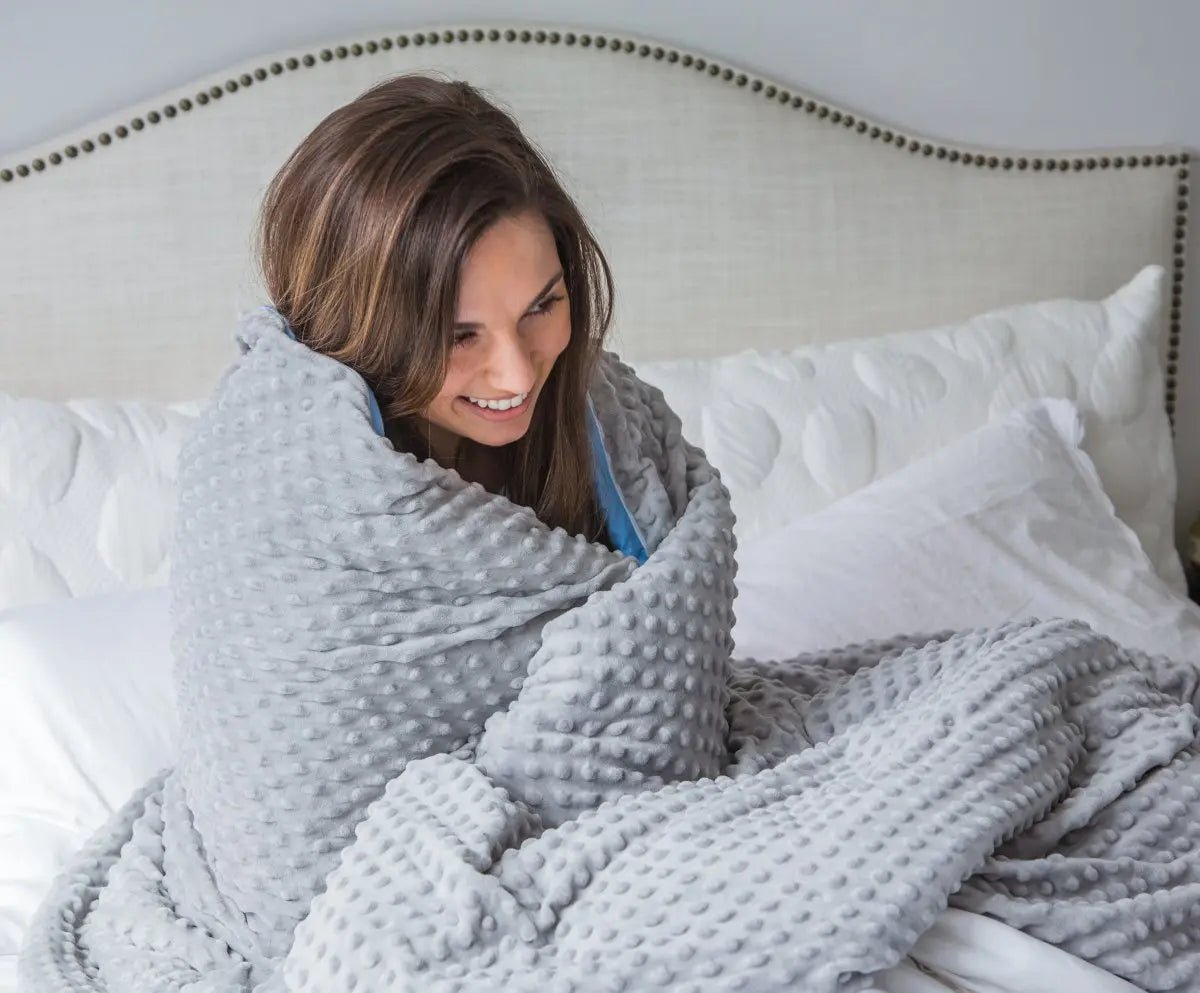
Certaines housses sont choisies autant pour le confort sensoriel que pour le contrôle de la température. Les finitions texturées peuvent procurer une sensation d'ancrage et d'invitation, en particulier pour les personnes qui trouvent le confort tactile apaisant au moment du coucher.
Ici, la préférence importe plus que la tendance. Une texture qui procure du confort à une personne peut être une distraction pour une autre, en particulier pour les dormeurs sensibles.
Obtenir le bon ajustement
Une housse de couverture lestée doit être suffisamment ajustée pour que l'insert reste en place. Si elle est trop lâche, la couverture peut bouger à l'intérieur de la housse, s'entasser à une extrémité ou sembler inégale sur le corps. Cela enlève la sensation de stabilité et d'ancrage que la plupart des gens recherchent.
Vérifiez attentivement les dimensions et ne supposez pas que toutes les couvertures lestées suivent les mêmes règles de taille que les jetés ou les couettes standard. Certaines sont intentionnellement plus petites afin que le poids reste sur le corps au lieu de pendre du lit.
Les fermetures sont également importantes. Les fermetures éclair offrent généralement la prise la plus sûre et la finition la plus propre. Des attaches à l'intérieur de la housse aident à ancrer l'insert et à réduire les mouvements. Les fermetures à boutons peuvent fonctionner, mais elles ont tendance à sembler moins sûres avec des couvertures plus lourdes.
Si vous achetez une housse pour une couverture que vous possédez déjà, mesurez d'abord l'insert. Une correspondance étroite sera généralement plus agréable que d'essayer de faire fonctionner une taille générique.
Pensez à vos habitudes de sommeil, pas seulement à votre décor
Une housse doit convenir à la façon dont vous dormez réellement. Si vous lisez au lit, grignotez sur le canapé ou partagez votre couverture lestée avec des enfants ou des animaux de compagnie, la lavabilité est plus importante qu'un look parfaitement stylisé. Si votre objectif principal est le soulagement du stress au moment du coucher, la sensation du tissu peut être plus importante que son apparence pliée au pied du lit.
C'est là que de nombreux acheteurs prennent une décision discrète mais importante. Achetez-vous pour l'apparence, pour la facilité d'entretien, pour le contrôle de la température ou pour le confort sensoriel ? La plupart des housses peuvent bien faire deux de ces choses. Moins nombreuses sont celles qui excellent dans les quatre.
Cela ne signifie pas que vous devez faire trop de compromis. Cela aide simplement à connaître votre priorité absolue avant d'acheter.
Un guide pratique des housses de couvertures lestées par saison
Si vous utilisez votre couverture lestée toutes les nuits, le confort saisonnier mérite d'être pris en compte.
Pendant les mois chauds, une housse respirante peut rendre la couverture plus légère et plus utilisable. Le bambou lisse ou le coton léger fonctionnent souvent bien ici. Pendant les mois froids, beaucoup de gens veulent plus de chaleur et une sensation plus enveloppante, ce qui rend les options en peluche ou de style sherpa plus attrayantes.
Si vous ne voulez acheter qu'une seule housse, choisissez-la pour votre saison la plus difficile. Pour la plupart des gens, cela signifie planifier en fonction de la chaleur plutôt que du froid. Vous pouvez toujours ajouter des couches en hiver, mais il est plus difficile de rendre une couverture trop chaude confortable en été.
Si vous voulez la configuration la plus flexible, avoir une housse rafraîchissante et une housse plus chaude peut rendre votre couverture lestée plus adaptable toute l'année.
Entretien et nettoyage sans tracas
Les couvertures lestées sont réconfortantes, mais elles ne sont pas toujours l'élément de literie le plus facile à entretenir. Une housse amovible simplifie grandement le processus.
Recherchez des matériaux lavables en machine et des instructions d'entretien claires. Une housse qui nécessite un traitement spécial peut sembler luxueuse, mais si elle devient difficile à nettoyer, elle risque de passer plus de temps hors de la couverture qu'avec.
Il convient également de vérifier si le tissu est susceptible de boulocher, de rétrécir ou de perdre de sa douceur avec le temps. Les matériaux de qualité supérieure devraient toujours rester agréables après des lavages répétés. C'est particulièrement important si la couverture est utilisée quotidiennement ou par une personne souffrant d'allergies, de peau sensible ou ayant une forte préférence pour un environnement de sommeil constamment propre.
Pour les foyers avec des enfants, des animaux de compagnie ou une utilisation fréquente, avoir une deuxième housse peut être étonnamment utile. Cela permet de garder la couverture en rotation pendant que l'autre housse est au lavage.
Ce qu'il faut rechercher si vous avez la peau sensible ou des besoins sensoriels
Tous les tissus doux ne sont pas apaisants. Pour certains dormeurs, en particulier ceux qui gèrent l'anxiété, la sensibilité sensorielle ou la surstimulation, la housse peut soit favoriser le calme, soit créer des frictions.
La meilleure option est généralement celle qui semble prévisible. Les tissus respirants et lisses avec une irritation minimale ont tendance à bien fonctionner pour les peaux sensibles. Les textiles certifiés sûrs peuvent également offrir une tranquillité d'esprit si la qualité du matériau est une préoccupation.
Si la texture vous aide à vous calmer, un tissu légèrement plus tactile peut être réconfortant. Si trop de sensations vous maintiennent éveillé, restez sur des finitions lisses et une construction simple. Il n'y a pas de meilleur choix universel ici - seulement celui qui aide votre corps à se calmer plus facilement.
Quand il est judicieux de mettre à niveau votre housse actuelle
Si votre couverture lestée vous semble trop chaude, difficile à laver, rêche sur la peau ou mal ajustée sur le lit, l'insert n'est peut-être pas le véritable problème. Dans de nombreux cas, c'est la housse qui doit changer.
Une meilleure housse peut rendre une ancienne couverture lestée plus facile à utiliser et plus adaptée à vos besoins actuels. C'est particulièrement vrai si votre sommeil a changé avec les saisons, les niveaux de stress ou les routines domestiques.
Pour les acheteurs à la recherche d'une configuration de sommeil plus raffinée, une housse bien conçue peut également donner l'impression que la couverture est plus intégrée au reste de votre literie, plutôt que d'être un outil de bien-être distinct.
Choisir en toute confiance
La meilleure housse de couverture lestée est celle qui soutient votre version du confort nuit après nuit. Pour certaines personnes, cela signifie un tissu frais et respirant et un entretien facile. Pour d'autres, cela signifie une finition plus chaude et plus douce qui aide le corps à se calmer plus rapidement.
Si vous hésitez entre deux options, choisissez celle que vous êtes le plus susceptible d'utiliser de manière constante. Un meilleur sommeil découle généralement d'un confort qui s'intègre naturellement à votre routine, et non de la configuration la plus compliquée. Une bonne housse devrait rendre votre couverture lestée plus simple, plus propre et plus accueillante dès le début de votre soirée.


Laissez un commentaire