






Produits sensoriels pour le coucher des enfants qui apaisent
La dernière heure avant le coucher peut sembler étonnamment longue pour un enfant. Le pyjama peut soudainement gratter, la chambre peut paraître trop lumineuse, et un petit changement dans la routine peut provoquer des larmes ou une énergie agitée. Les bons produits sensoriels pour le coucher des enfants n'effacent pas toutes les soirées difficiles, mais ils peuvent créer des signaux familiers de sécurité, de confort et de transition.
Pour les parents, l'objectif n'est pas un coucher parfaitement silencieux. C'est un coucher plus doux : une routine répétable qui aide le corps et l'esprit de l'enfant à passer de l'activité de la journée au repos.
Pourquoi le confort sensoriel peut changer l'heure du coucher
Les enfants absorbent beaucoup à travers leurs sens. Une maison bruyante, une chambre chaude, une couverture rigide ou le sentiment d'être pressé peuvent maintenir leur système nerveux en alerte. Certains enfants sont particulièrement sensibles à ces stimuli, tandis que d'autres ont simplement besoin de plus de temps et de constance pour s'apaiser.
Les supports sensoriels fonctionnent mieux lorsqu'ils sont apaisants, prévisibles et faciles à utiliser. Un tissu doux contre la peau, une lumière tamisée ou une pression douce et uniforme peuvent devenir un signal que la journée se termine. Avec le temps, ces signaux peuvent aider à réduire les allées et venues au moment du coucher et à faire place à une routine plus stable.
Cela dépend de l'enfant, bien sûr. Un enfant peut se détendre sous une couche douillette, tandis qu'un autre a besoin d'une literie plus fraîche et de beaucoup d'espace pour bouger. Observez ce qui aide votre enfant à se détendre plutôt que ce qui semble le plus apaisant sur une étagère.
Produits sensoriels pour le coucher des enfants à considérer
Les choix les plus utiles sont souvent simples. Commencez par un ou deux éléments de confort, utilisez-les de manière cohérente pendant quelques semaines, et soyez attentif à la réaction de votre enfant.
Les couvertures lestées pour un ancrage doux
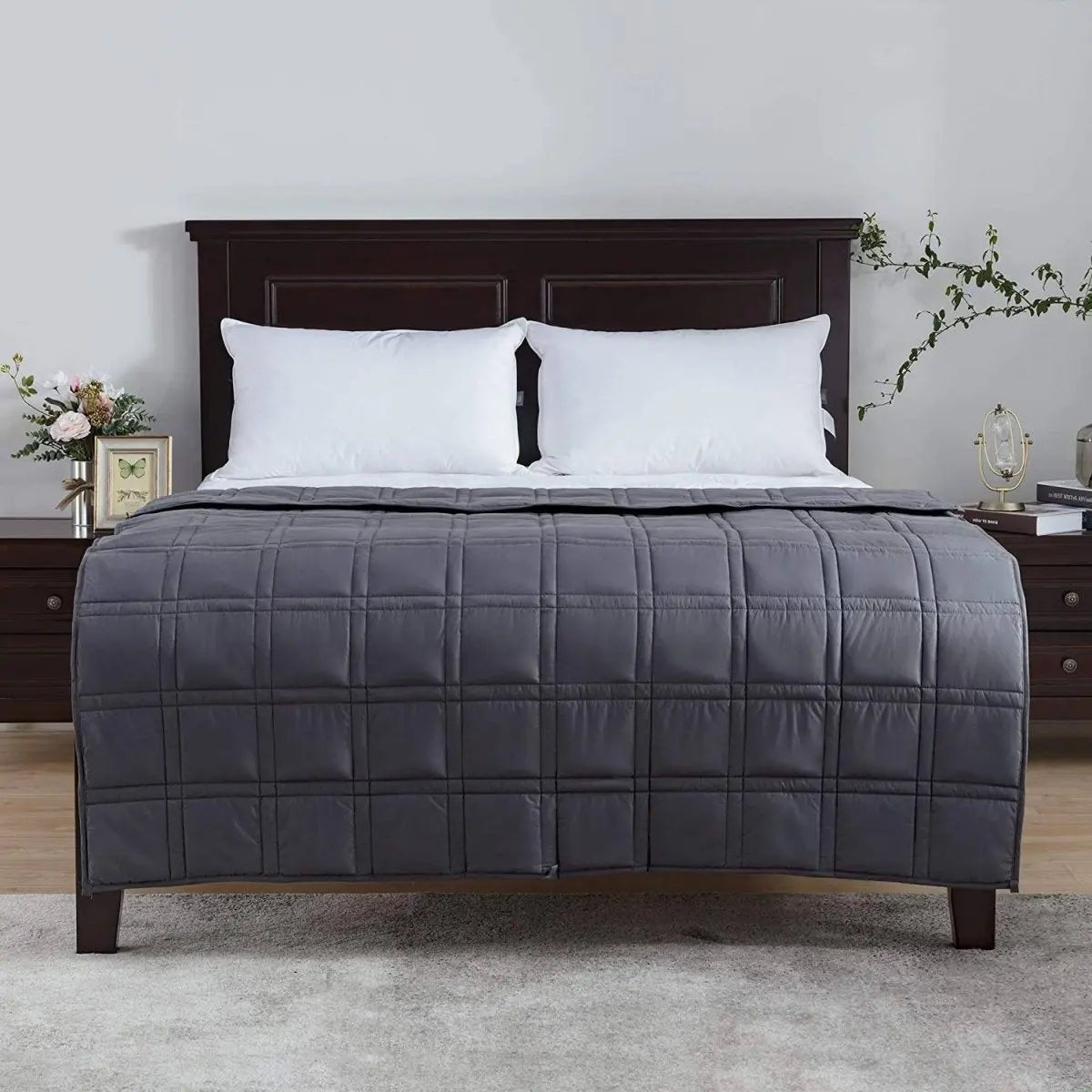
Pour certains enfants, une couverture lestée bien choisie procure une sensation réconfortante de pression constante. Cette sensation de toucher profond peut être apaisante pendant une période de la journée où les soucis, l'excitation ou l'agitation physique ont tendance à se manifester.
Une couverture lestée pour enfants ne devrait jamais être restrictive. Votre enfant doit pouvoir la déplacer de manière autonome et la retirer sans aide. Choisissez une taille et un poids appropriés en fonction des instructions du produit et des besoins de votre enfant, et ne l'utilisez que s'il est suffisamment âgé pour la manipuler en toute sécurité. Les couvertures lestées ne conviennent pas aux bébés ou aux tout-petits, et les parents doivent consulter un pédiatre ou un ergothérapeute si un enfant a des problèmes respiratoires, de mobilité, de circulation ou d'autres problèmes médicaux.
Le matériau est également important. Une construction respirante peut rendre une couverture lestée rassurante sans devenir trop chaude, en particulier pour les enfants qui ont chaud la nuit. Les couvertures lestées pour enfants de Better Sleep sont conçues autour de cet équilibre : un confort thérapeutique avec la douceur et la respirabilité nécessaires pour une utilisation quotidienne.
Literie douce et thermorégulatrice
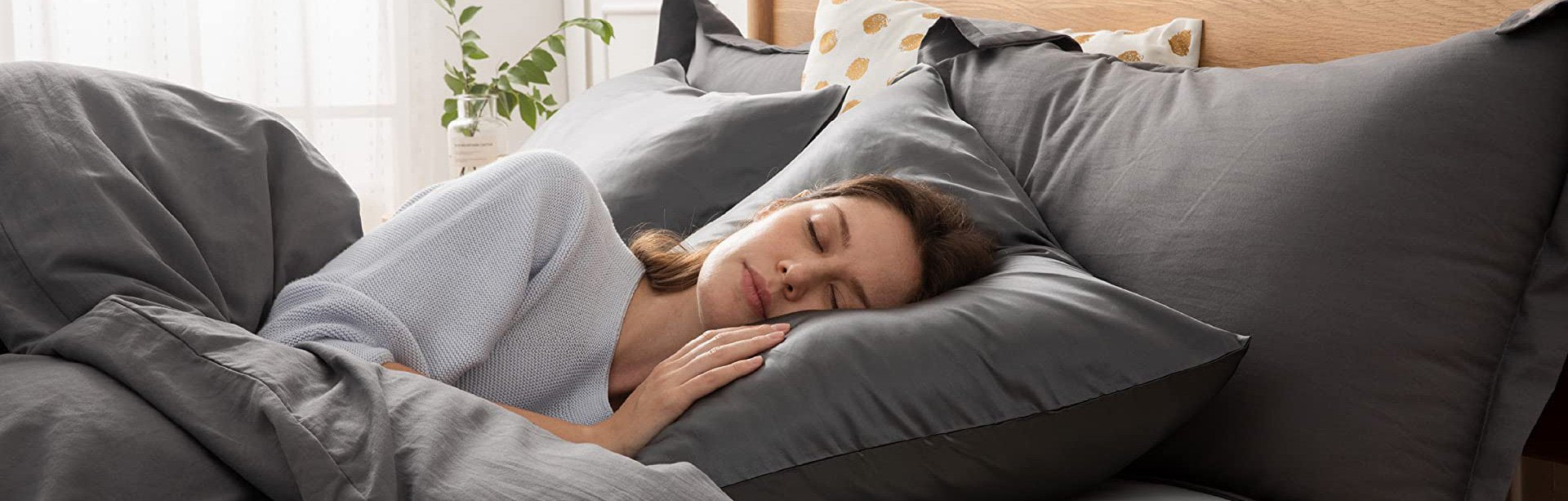
Tous les besoins sensoriels ne nécessitent pas de poids. Parfois, le problème est la chaleur, la texture ou une couverture qui semble trop volumineuse. Des draps lisses, une housse de couette douce et des couches légères peuvent aider les enfants qui se sentent mal à l'aise lorsque la literie retient la chaleur ou est rugueuse contre leur peau.
Les tissus respirants et naturels peuvent être particulièrement utiles toute l'année. Un enfant qui dort confortablement est moins susceptible de se réveiller frustré par des couvertures emmêlées ou un lit surchauffé. Gardez l'environnement de sommeil simple, avec des couches qui peuvent être ajoutées ou retirées facilement selon les saisons.
Un élément de confort tactile
Certains enfants s'apaisent plus facilement lorsque leurs mains ont quelque chose de calme et de familier à tenir. Une petite couverture douce, un article de confort en peluche, ou un oreiller sensoriel doux peuvent procurer une texture rassurante sans ajouter de stimulation.
La clé est de réserver cet article pour l'heure du coucher autant que possible. S'il fait partie de la même séquence nocturne — bain, pyjama, histoire, objet de confort, lumières éteintes — il peut créer un fort sentiment de familiarité. Vérifiez qu'il est adapté à l'âge et exempt de pièces détachées ou de caractéristiques qui pourraient devenir un danger.
Lumière et son doux
La lumière et le son sont souvent négligés, bien qu'ils puissent façonner l'ambiance générale d'une pièce. Une lumière chaude et tamisée au chevet peut rendre la transition du jeu moins abrupte que le passage direct à l'obscurité. Pour les enfants qui trouvent le silence total déstabilisant, un bruit de ventilateur constant ou un bruit blanc à faible volume peut adoucir les sons imprévisibles de la maison.
Il y a un compromis ici. Un projecteur lumineux, un spectacle de lumière coloré ou de la musique avec des paroles changeantes peuvent être divertissants plutôt que reposants. Choisissez des outils qui rendent la pièce plus calme et moins exigeante visuellement, pas plus excitante.
Construire une routine sensorielle, pas une collection
Un tiroir rempli de produits de sommeil n'est pas nécessaire. En fait, trop de choix peuvent créer plus de négociations au moment du coucher. La vraie valeur réside dans la création d'une courte séquence que votre enfant peut reconnaître.
Commencez environ 30 à 45 minutes avant l'heure du coucher souhaitée. Baissez les lumières, rangez les écrans rapides et proposez une activité constante comme la lecture ou le coloriage calme. Puis introduisez le signal sensoriel qui fonctionne pour votre enfant : une couverture lestée respirante tout en écoutant une histoire, une couche douce préférée enroulée autour de ses épaules, ou le même son calme en arrière-plan.
Donnez du temps à la routine. Un enfant peut avoir besoin de plusieurs nuits avant d'associer une nouvelle couverture ou un nouveau son au fait de se détendre. S'il le repousse, ne forcez pas. Le confort sensoriel doit être perçu comme une invitation, jamais une exigence.
Comment choisir le bon soutien pour votre enfant
Commencez par rechercher des schémas dans l'heure précédant le coucher. Votre enfant monte-t-il et descend-il du lit à plusieurs reprises parce qu'il a un surplus d'énergie ? Se plaint-il des coutures, des étiquettes, de la chaleur ou du pyjama ? Devient-il anxieux une fois les lumières éteintes ? La réponse indique un choix plus réfléchi.
Les enfants qui recherchent des câlins, empilent des couvertures ou aiment être bien blottis peuvent bien réagir à une pression douce et sûre. Les enfants qui repoussent les couvertures ou se réveillent en sueur peuvent bénéficier davantage d'une literie rafraîchissante et respirante. Si l'obscurité est difficile, commencez par une veilleuse douce et réduisez progressivement sa luminosité une fois que la routine semble sécurisée.
La qualité mérite d'être prise en compte, car les produits de literie sont utilisés près de la peau, nuit après nuit. Recherchez des matériaux doux et durables et des textiles soucieux de la sécurité, y compris les options certifiées OEKO-TEX lorsque cela est possible. La facilité d'entretien est également importante. Un article de confort qui ne peut pas être lavé de manière réaliste peut rapidement devenir moins réconfortant.
Quelques limites de sécurité et de confort
Le calme doit toujours primer sur la commodité. Gardez les lits exempts de tout encombrement inutile, en particulier pour les jeunes enfants, et suivez les instructions d'âge, de poids et d'entretien fournies avec chaque produit. N'utilisez jamais de produits lestés pour les nourrissons, et évitez de choisir une couverture simplement parce qu'elle semble lourde pour un adulte.
Il est également utile de fixer des attentes réalistes. Les produits sensoriels peuvent soutenir une routine de coucher, mais ils ne sont pas un remède aux difficultés de sommeil persistantes, aux cauchemars, à la douleur ou à l'anxiété. Si la détresse au coucher est fréquente, intense ou affecte le bien-être diurne, un pédiatre peut aider à identifier la meilleure prochaine étape.
Faites du coucher un endroit où se poser
Les enfants n'ont pas besoin d'un espace de sommeil parfait pour se sentir en sécurité. Ils ont besoin de quelques conforts fiables, d'un rythme calme et d'adultes capables d'affronter une soirée difficile avec patience. Que ce soit une couche douce et respirante ou l'assurance tranquille d'une couverture lestée soigneusement choisie, les meilleurs produits sensoriels pour le coucher des enfants aident le repos à devenir familier.
Commencez modestement ce soir. Choisissez un signal réconfortant, répétez-le avec soin, et laissez la routine faire son doux travail.


Laissez un commentaire