




Les enfants peuvent-ils dormir avec des couvertures lestées ?
Une routine de sommeil peut sembler calme en surface et pourtant être difficile en dessous. Si votre enfant a du mal à s'endormir, se réveille souvent, ou semble avoir besoin d'un confort supplémentaire la nuit, vous vous demandez peut-être si les enfants peuvent dormir avec des couvertures lestées. La réponse courte est oui – certains enfants le peuvent, mais seulement si la couverture est adaptée à leur âge, utilisée correctement et approuvée par le pédiatre de votre enfant si nécessaire.
Les couvertures lestées sont souvent décrites comme ayant un effet d'ancrage. Pour certains enfants, cette pression douce et uniforme peut être suffisamment apaisante pour faciliter une transition plus calme vers le sommeil. Mais une couverture lestée ne convient pas à tous les enfants, et elle ne devrait jamais être traitée comme une solution universelle pour le sommeil.
Les enfants peuvent-ils dormir en toute sécurité avec des couvertures lestées ?
Ils le peuvent dans certains cas, mais la sécurité prime. Le facteur le plus important est l'âge, la taille, la force de votre enfant et sa capacité à déplacer la couverture de manière autonome. Un enfant doit être capable de retirer la couverture seul, de changer de position confortablement et de communiquer s'il a trop chaud, se sent contraint ou mal à l'aise.
Les couvertures lestées ne sont pas considérées comme sûres pour les nourrissons et les jeunes enfants. Les très jeunes enfants n'ont pas la coordination physique ou la conscience pour gérer un poids supplémentaire pendant le sommeil, ce qui peut augmenter les risques. Pour les enfants plus âgés, la discussion devient plus individualisée. Une couverture qui semble apaisante pour un enfant peut être accablante pour un autre.
C'est là que les parents ont souvent besoin d'une réponse plus nuancée qu'un simple oui ou non. Si votre enfant a une condition médicale, un problème respiratoire, un trouble du sommeil, un problème circulatoire ou une différence de développement qui affecte la mobilité ou la communication, il est judicieux de consulter votre pédiatre ou votre ergothérapeute avant d'introduire une couverture lestée.
Pourquoi certains enfants réagissent bien aux couvertures lestées
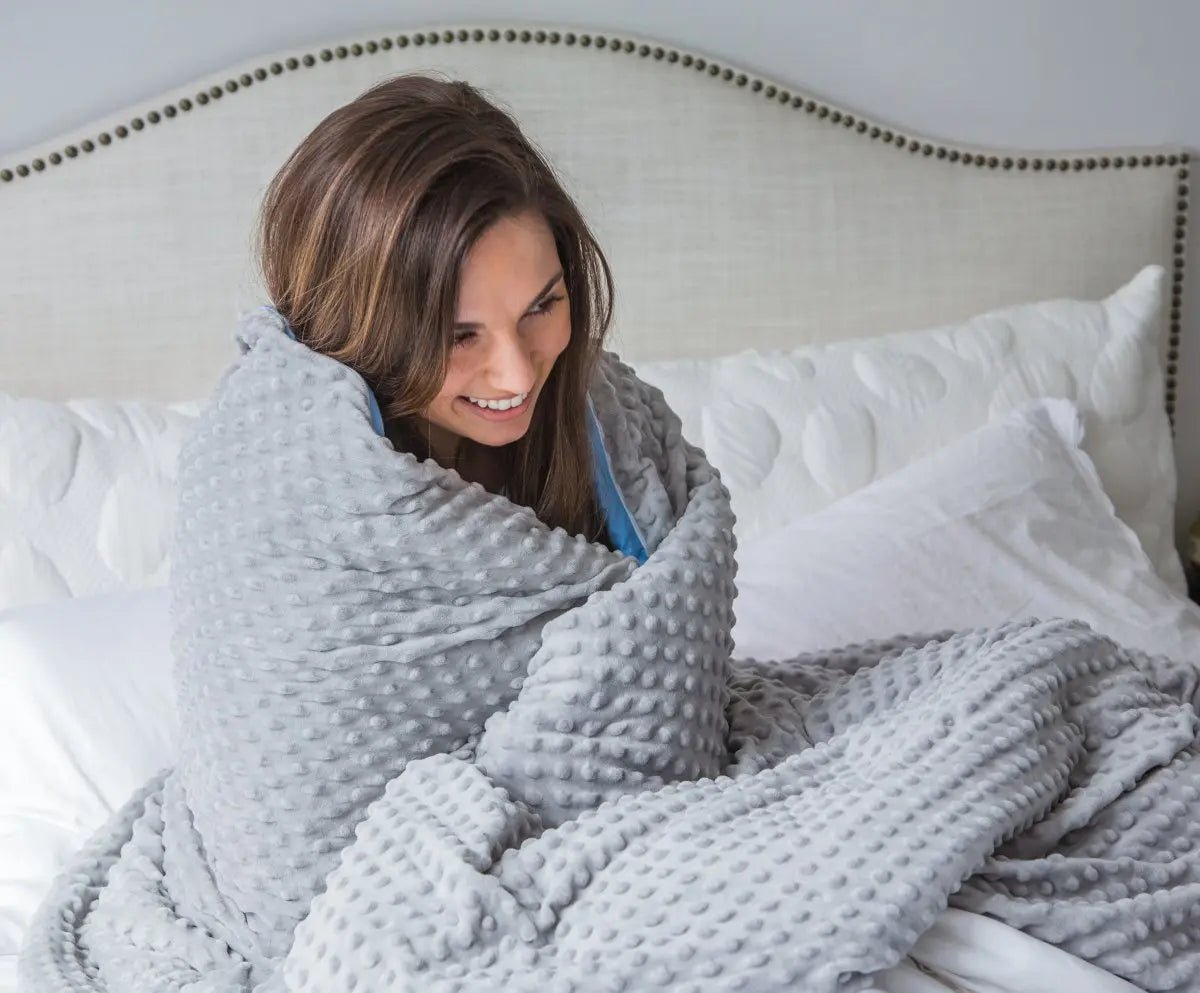
Certains enfants recherchent naturellement la pression. Ils empilent les couvertures, se nichent dans les coins du canapé ou demandent des câlins serrés lorsqu'ils se sentent surstimulés. Une couverture lestée peut parfois offrir un sentiment de confinement et de confort similaire, surtout à l'heure du coucher, lorsque les sollicitations de la journée finissent par les rattraper.
Cette réaction est souvent liée à ce que l'on appelle la stimulation par pression profonde. L'idée est simple : une pression constante et uniformément répartie peut aider le corps à se sentir plus sûr et plus stable. Pour certains enfants, cela peut favoriser la relaxation, faciliter les transitions vers le sommeil et réduire l'agitation avant de dormir.
Cela dit, « peut aider » est l'expression clé. Une couverture lestée ne traite pas l'anxiété, les défis sensoriels ou l'insomnie à elle seule. Elle fonctionne mieux dans le cadre d'un environnement de sommeil plus large – qui comprend une routine prévisible, une température ambiante confortable et une literie qui ne retient pas trop la chaleur.
Quand une couverture lestée peut être envisagée
Une couverture lestée peut être une option judicieuse si votre enfant est assez âgé et que vous remarquez qu'il recherche constamment un confort physique pour se détendre. Certains parents les envisagent pour les enfants qui ont du mal à se calmer, se sentent agités au moment du coucher ou bénéficient d'un soutien sensoriel pendant les moments calmes.
Les enfants ayant des sensibilités sensorielles, un TDAH ou de l'anxiété peuvent parfois y réagir particulièrement bien, mais cela ne rend pas les couvertures lestées automatiquement appropriées pour tous les enfants de ces groupes. L'objectif est le confort, pas la contrainte. Si la couverture crée une résistance, une surchauffe ou perturbe le sommeil, ce n'est pas le bon choix.
Les parents sont souvent surpris par la subtilité de l'effet. Une bonne couverture lestée ne devrait pas immobiliser un enfant ni le faire s'endormir instantanément. Elle devrait simplement procurer une sensation apaisante – comme une douce couche de réconfort.
Comment choisir le bon poids
La ligne directrice la plus courante est de choisir une couverture qui représente environ 10 % du poids corporel de votre enfant, parfois avec un petit ajustement en fonction de l'âge et du confort. C'est un point de départ, pas une règle qui l'emporte sur le bon sens.
Si votre enfant se situe entre deux tailles ou est particulièrement sensible à la pression, il est généralement préférable de commencer par une option plus légère. Une couverture trop lourde peut être restrictive et inconfortable. Une option légèrement plus légère offre souvent l'effet apaisant que les parents recherchent sans créer de tension inutile.
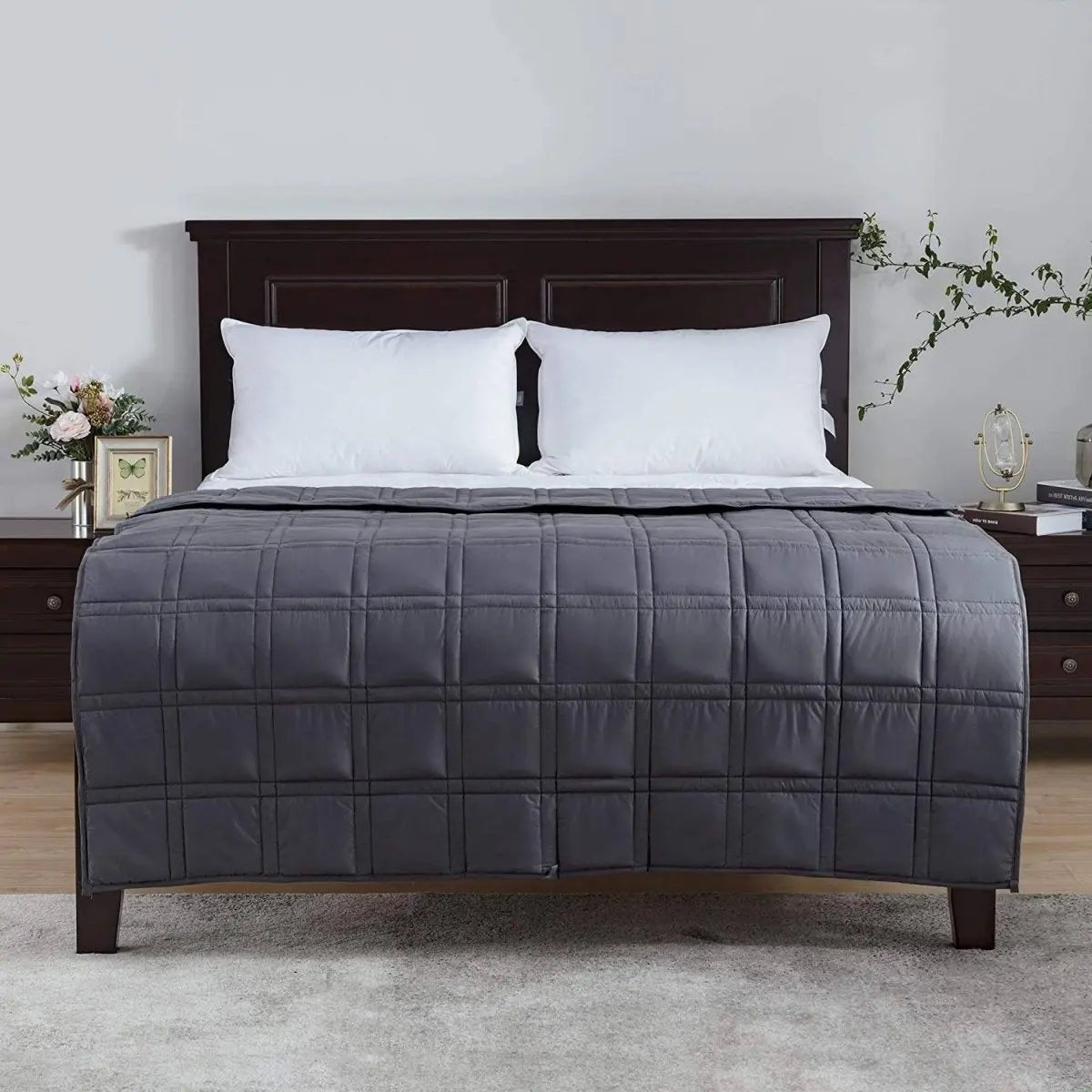
La taille est également importante. La couverture doit s'adapter au corps de votre enfant, et non à l'ensemble du lit. Les couvertures lestées sont conçues pour reposer sur le dormeur, et non pour draper lourdement sur les côtés comme une couette traditionnelle. Une couverture de taille appropriée est plus facile à manipuler pour un enfant et moins susceptible de s'agglutiner ou de se déplacer de manière inconfortable pendant la nuit.
Les enfants peuvent-ils dormir avec des couvertures lestées toutes les nuits ?
Certains le peuvent, surtout si la couverture est confortable, respirante et facile à utiliser de manière autonome. D'autres peuvent mieux la tolérer en l'utilisant seulement pendant une partie de la routine du coucher, comme pendant la lecture, le calme ou l'endormissement.
L'utilisation nocturne dépend de la réaction de votre enfant. S'il dort plus paisiblement, se réveille moins souvent et semble à l'aise toute la nuit, une utilisation régulière peut avoir du sens. S'il la rejette, se réveille en sueur ou semble irrité par elle après quelques nuits, c'est aussi une information utile.
Il n'y a aucun intérêt à forcer la cohérence avec un outil sensoriel qui ne convient pas à votre enfant. Le bon soutien au sommeil devrait sembler suffisamment naturel pour que votre enfant l'accepte sans stress.
Règles de sécurité que les parents ne devraient pas ignorer
Quelques directives simples font une réelle différence. Une couverture lestée ne doit jamais être utilisée pour les bébés ou les très jeunes enfants. Elle ne doit jamais couvrir le visage ou la tête de votre enfant, et elle ne doit pas être superposée à des couettes lourdes qui augmentent la rétention de chaleur.
La respirabilité est plus importante que beaucoup de parents ne l'imaginent. Les enfants ont tendance à avoir chaud en dormant, et certaines couvertures lestées retiennent plus la chaleur que d'autres. Recherchez des matériaux doux et respirants qui favorisent le confort en toutes saisons, surtout si votre enfant a déjà chaud la nuit.
Il est également utile de faire un essai rapide avant de s'engager à l'utiliser toute la nuit. Laissez votre enfant se reposer sous la couverture pendant qu'il lit ou se détend à proximité. Observez s'il peut bouger facilement, s'il semble à l'aise et s'il demande à continuer à l'utiliser. Ce petit test peut vous en dire bien plus que l'emballage.
Signes qu'une couverture lestée n'est pas le bon choix
Même une couverture bien faite ne conviendra pas à tous les enfants. Si votre enfant semble frustré, inhabituellement agité, transpire, ou désire l'enlever, écoutez cette réaction. S'il dit qu'elle est trop lourde, croyez-le.
Une couverture lestée peut également être le mauvais choix si votre enfant a du mal à changer de position pendant le sommeil, n'aime pas la pression sur son corps, ou devient plus alerte plutôt que plus calme en l'utilisant. Parfois, une couche sensorielle plus légère, une literie plus douce, ou un rythme de sommeil plus constant est la meilleure réponse.
Cela peut être décevant pour les parents qui espéraient une solution simple. Mais c'est toujours un résultat utile. Savoir ce qui n'aide pas vous rapproche de ce qui aidera.
Ce qu'il faut rechercher dans une couverture lestée pour enfants
Si vous décidez d'en essayer une, concentrez-vous d'abord sur la fonction. Les meilleures couvertures lestées pour enfants sont soigneusement dimensionnées, uniformément lestées et fabriquées avec des tissus respirants et doux. Une construction de remplissage sécurisée aide à empêcher le poids de se déplacer dans une zone, ce qui peut rendre la couverture grumeleuse ou inégale.
La texture compte aussi. Certains enfants aiment la douceur moelleuse, tandis que d'autres préfèrent une finition plus lisse et plus fraîche qui semble moins accablante sur la peau. Si votre enfant est sensible au toucher, le tissu peut influencer l'acceptation autant que le poids lui-même.
Pour de nombreuses familles, le meilleur choix est une couverture conçue spécifiquement pour les enfants plutôt qu'une version adulte plus petite. Un design axé sur l'enfant est plus susceptible de refléter les bonnes proportions, une gamme de poids gérable et des détails de confort pour les jeunes dormeurs.
Une approche calme fonctionne mieux
Si vous introduisez une couverture lestée, veillez à ne pas trop insister. Proposez-la comme une option, pas comme une exigence. Intégrez-la à une routine familière avec la lecture, des lumières tamisées et une pièce calme, afin que votre enfant l'associe au confort plutôt qu'au changement.
Il peut également être utile de décrire ce que la couverture est censée procurer en termes simples : douillette, douce et apaisante. Les enfants n'ont pas besoin d'une explication technique. Ils ont juste besoin de savoir qu'ils sont en sécurité et en contrôle.
Chez Better Sleep, c'est ainsi que nous concevons les produits de confort pour les enfants comme pour les adultes – non pas comme des solutions miracles, mais comme des supports soigneusement choisis qui facilitent l'accès au repos.
Si vous vous demandez encore si votre enfant est prêt, cette pause est un bon instinct. Les meilleures décisions concernant le sommeil des enfants proviennent généralement d'un équilibre entre réconfort, observation et retenue. Commencez en douceur, observez attentivement et laissez le confort de votre enfant guider la prochaine étape.


Laissez un commentaire