







10 Best Calming Bedroom Essentials for Rest
A bedroom can look beautifully put together and still feel too stimulating to rest in. The difference is often in the sensory details: the temperature of your sheets, the weight across your body, the light reaching your eyes, and whether your bed feels like a place to let the day go. The best calming bedroom essentials support those small but meaningful signals, helping your space feel quieter, softer, and more ready for sleep.
For most people, creating a calmer bedroom does not mean replacing everything at once. It means choosing a few high-impact layers that address the reasons sleep feels unsettled in the first place: stress, sensory overload, overheating, or a mind that has not fully slowed down.
The Best Calming Bedroom Essentials Start With Comfort
A calming sleep environment should feel personal, not overly styled or clinical. Start with the essentials that touch your body every night, then build outward. This approach gives you a bedroom that supports deeper rest without adding visual clutter or a complicated routine.
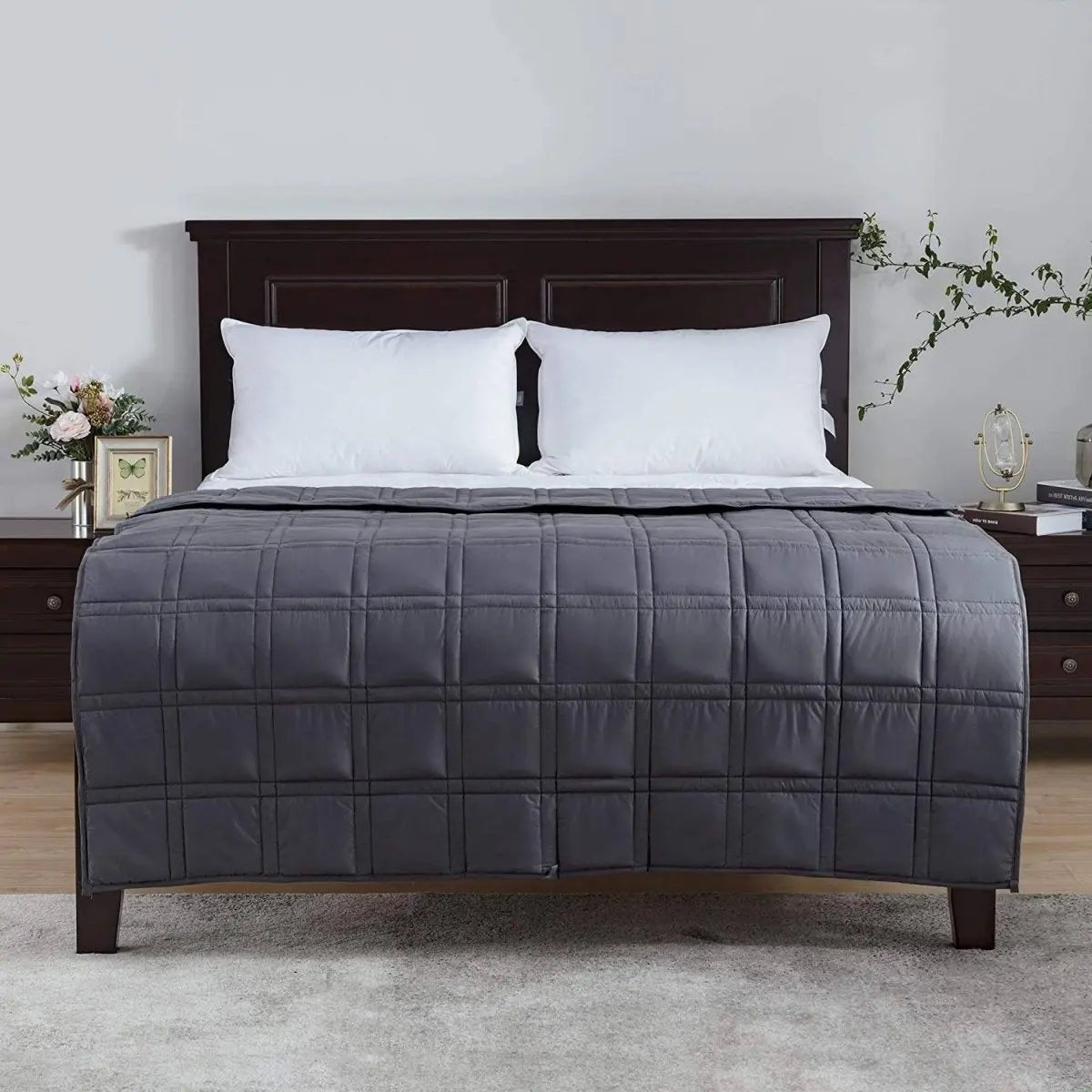
1. A weighted blanket for gentle grounding
For many people, a weighted blanket is the most noticeable change they can make to an evening routine. Its evenly distributed pressure is designed to create a secure, settled feeling, similar to the comfort of a gentle hug. That grounding sensation may be especially welcome after a demanding workday, during periods of stress, or when your body feels tired but your mind is still active.
Weight is personal. A blanket that feels supportive should never feel restrictive, so choose one based on your body size and comfort preferences rather than assuming heavier is better. If you sleep warm, look for breathable materials or a cooling therapy set. If you want a cozier, more layered look for winter, a plush sherpa or chunky knit style can add warmth without sacrificing the calming ritual.
Weighted blankets are not the right choice for everyone, including people with certain respiratory, circulation, or mobility concerns. When in doubt, speak with a healthcare professional before adding one to your sleep routine.
2. Cooling sheets that make relaxation easier
There is little calming about waking up overheated at 2 a.m. Temperature is one of the most overlooked parts of sleep comfort, yet it can shape how quickly you settle and how often you wake during the night.
Breathable bamboo sheets are a thoughtful choice for hot sleepers, people experiencing night sweats, and couples with different temperature preferences. The fabric feels smooth and light against the skin while helping the bed feel less stuffy. They are also a practical year-round layer: cool enough for warmer nights, soft enough to keep the bed inviting when temperatures drop.
Focus on feel, not just thread count. A sheet set should be comfortable the moment you slide into bed, with enough breathability to prevent that trapped-heat feeling that makes rest harder to find.
3. A mattress topper that softens the whole bed
If your mattress is too firm, uneven, or simply no longer as comfortable as it once was, a quality topper can be a more approachable first step than replacing the mattress. It adds a cushioned layer between you and a sleep surface that may be creating pressure points at the shoulders, hips, or lower back.
The goal is not to make your bed dramatically plush if you need stable support. It is to create a more forgiving surface that helps your body relax into a natural sleeping position. Cooling options are particularly useful if you tend to feel warm under a duvet or weighted blanket.
A topper will not correct a severely sagging mattress, but it can make a meaningful difference when your current bed is supportive yet lacks comfort.
4. A silk pillowcase for a softer sensory finish
A pillowcase might seem like a small detail, but your face and hair are in contact with it for hours. Silk has a smooth, low-friction finish that feels cool and gentle, making it a welcome addition for anyone who values a more refined sleep experience.
Beyond its luxurious feel, a silk pillowcase can reduce the tugging that may contribute to tangled hair and sleep creases. It is not a cure for restless sleep, but it can make the bed feel more considered and comfortable - the kind of detail that invites you to slow down rather than scroll for another half hour.
Choose a washable option and treat it as a comfort layer, not a precious item you are afraid to use. The best bedroom essentials should make nightly life easier.
5. A weighted sleep mask for light-sensitive sleepers
Streetlights, early sunrises, a partner reading in bed, and screen glow from another room can all make it difficult to settle. A weighted sleep mask combines gentle pressure around the eyes with light blocking, helping create a darker, more contained sense of calm.
This can be particularly helpful for shift workers, frequent travelers, and anyone whose bedroom cannot be completely dark. Look for an adjustable fit that rests comfortably without pressing too firmly on the eyes or nose. A sleep mask should feel like a cue for rest, not another thing to tolerate.
6. An all-season bedding system
A bed that is perfect in January can feel unbearable in July. Rather than using one overly heavy comforter all year, consider an all-season system with adaptable layers. A lighter insert, a breathable duvet cover, and an extra blanket at the foot of the bed give you options without forcing you to remake the entire sleep setup when the weather changes.
Adaptability matters in homes where temperatures shift overnight or partners sleep at different comfort levels. It also helps preserve the calming association with bed: you are less likely to dread getting under covers when you know you can adjust them easily.
Keep the color palette quiet if visual calm matters to you. Soft neutrals, muted greens, warm whites, and gentle blues tend to create less visual noise than high-contrast patterns. The right choice is still the one that feels reassuring when you walk into the room.
Build a Bedroom That Feels Less Demanding
The most effective calming bedroom essentials are often the ones that remove a small source of friction. A dedicated laundry basket keeps clothes from collecting on the floor. A bedside tray gives your glasses, lip balm, and book one intentional home. A dimmable lamp lets you move from bright task lighting to a softer evening glow.
These are not dramatic changes, but they matter because the bedroom should not present you with unfinished tasks at the end of the day. If clutter makes you feel tense, begin with the surfaces you see from bed. Clear the nightstand, simplify the top of the dresser, and leave only what supports your wind-down routine.
Scent can also be useful, but keep it subtle. A lightly scented linen spray or a low-intensity diffuser may help signal that bedtime is near. Strong fragrance can be distracting, and it is not ideal for everyone, especially those with sensitivities, pets, or young children. Unscented, clean bedding is often the most calming choice of all.
How to Choose What You Need First
There is no single perfect formula because restless sleep has different causes. If you wake hot, prioritize cooling sheets and breathable bedding. If you crave more security at night, begin with a weighted blanket or weighted sleep mask. If you wake sore, look at your mattress comfort and pillow support before investing in decorative accents.
For households with children, sensory comfort can be especially meaningful, but safety and age-appropriate sizing should always lead the decision. Keep bedtime changes simple and predictable. One comforting addition that becomes part of a steady routine is often more helpful than a room full of new stimulation.
Better Sleep designs its bedding and sensory comfort pieces around this idea: elevated materials, thoughtful function, and a more restorative feeling at the end of the day. Choose what solves a real comfort need, then give yourself a few nights to notice the difference.
Tonight, make one small adjustment before you turn out the light. Smooth the sheets, dim the lamp, add a breathable layer, or reach for the comfort that helps your body feel safely at rest. A calmer night often begins with that simple permission to settle.


Leave a comment