






How to Reduce Bedtime Anxiety Naturally
Bedtime anxiety often shows up at the worst possible moment - when the lights are off, your body is tired, and your mind suddenly feels wide awake. If you are searching for how to reduce bedtime anxiety, the goal is not to force sleep. It is to create enough calm, comfort, and predictability that sleep can arrive without a fight.
For many adults, nighttime anxiety is less about one dramatic cause and more about accumulation. A full day of decisions, overstimulation, unfinished tasks, parenting, work pressure, screen time, and physical tension can all follow you into bed. When your nervous system never fully shifts out of alert mode, lying still in a quiet room can make those feelings more noticeable.
Why bedtime can make anxiety feel louder
At night, there are fewer distractions. During the day, your brain has places to put its energy. At bedtime, that mental traffic has nowhere to go. Thoughts that felt manageable at 2 p.m. can feel heavy at 11 p.m., especially if you already associate bedtime with tossing, turning, or worrying about not sleeping.
That pattern matters. Once your brain starts linking bed with pressure, sleep can begin to feel like a performance. You watch the clock, calculate how many hours are left, and become more alert the harder you try to relax. This is one reason bedtime anxiety can be so frustrating - fatigue is there, but calm is not.
Physical comfort also plays a larger role than many people realize. If you are too warm, overstimulated, or unable to settle your body, anxiety tends to build faster. A restless nervous system responds well to cues of safety, and those cues are often sensory before they are mental.
How to reduce bedtime anxiety by changing the hour before bed
If your nights feel unsettled, start by looking at the transition into sleep rather than sleep itself. The most effective evening routines are not complicated. They are consistent, quiet, and easy to repeat.
Begin with light and stimulation. Bright overhead lighting, fast-paced shows, work emails, and social scrolling can all keep your brain engaged longer than you think. You do not need a perfect digital detox, but it helps to create a softer final hour. Lower the lights, reduce noise, and choose activities with a slower rhythm. A shower, light stretching, quiet reading, or simple tidying can all signal that the day is ending.
It also helps to close open mental loops before you get into bed. If your mind starts listing everything you forgot to do, keep a notebook nearby and write it down earlier in the evening. A short brain dump is often more effective than trying to think your way into calm. Once the thought has a place to live, your brain is less likely to keep rehearsing it.
Food and timing matter too. Going to bed overly full, slightly hungry, caffeinated, or after a late glass of wine can all make your body feel less settled. There is no single rule that works for everyone, but bedtime anxiety tends to ease when evenings feel steady rather than spiking and crashing.
Focus on calming the body first
An anxious mind is difficult to reason with when the body still feels activated. That is why physical regulation is often the fastest way to soften bedtime anxiety.
Start with your breath, but keep it simple. If formal breathing exercises make you more self-conscious, skip the complicated counts. Try a longer exhale than inhale and let your shoulders drop as you breathe out. Even a few minutes can help reduce that wired feeling.
Muscle tension is another common trigger. Many people climb into bed carrying tightness in the jaw, neck, hips, or hands without noticing it. Gentle stretching, progressive muscle relaxation, or even pressing your body more firmly into the mattress can create a grounded sensation that tells your nervous system it is safe to let go.
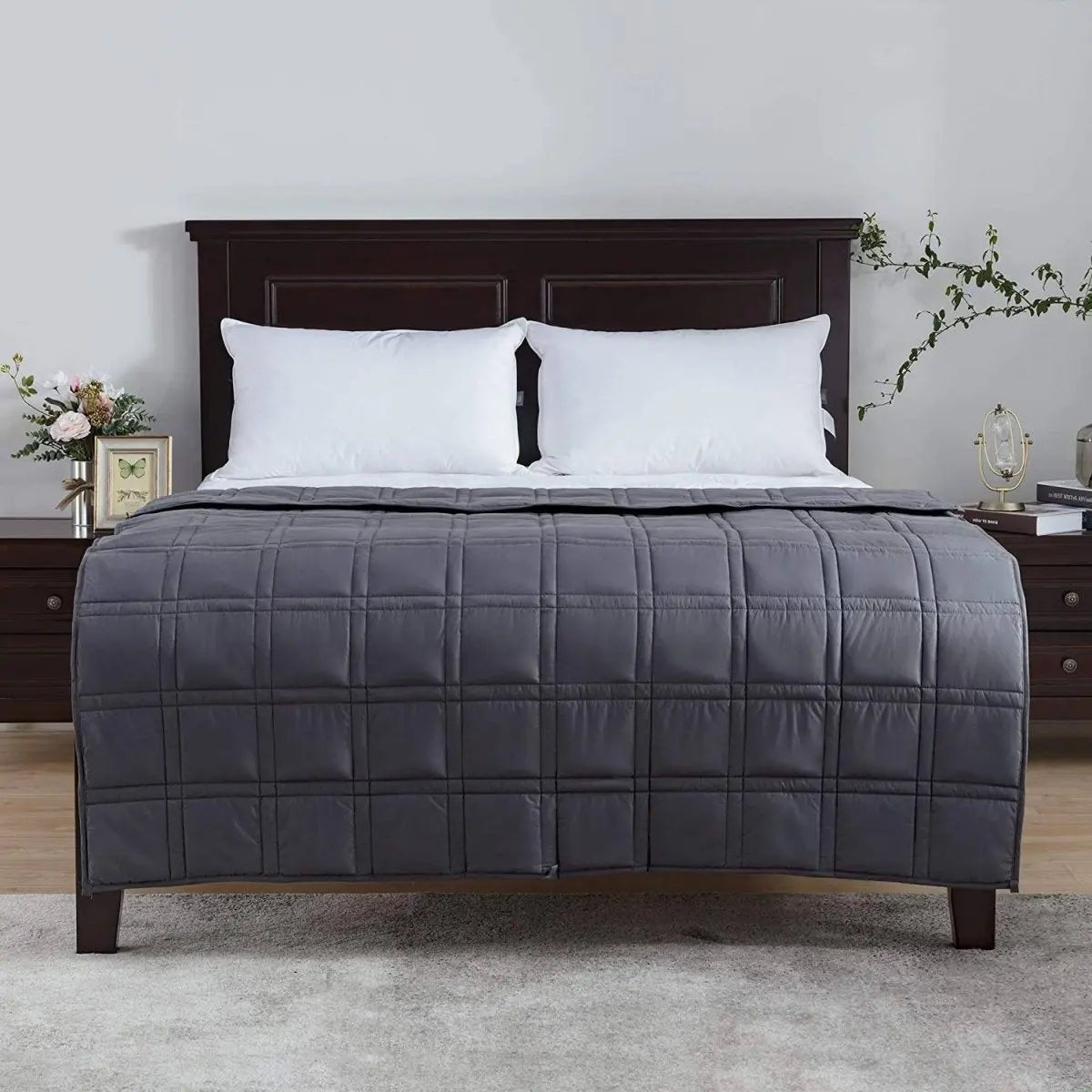
This is also where sleep environment matters. Soft, breathable layers, reduced sensory clutter, and gentle weight can all support a stronger sense of calm. For some people, a weighted blanket helps reduce bedtime anxiety because the pressure feels steady and containing, almost like a physical cue to settle. It is not a cure-all, and it is not ideal for every sleeper, especially if you tend to sleep hot or dislike feeling restricted. But for people who feel overstimulated, restless, or emotionally wound up at night, that grounded sensation can be deeply reassuring.
Cooling materials can help just as much if temperature sensitivity is part of the problem. Anxiety and overheating often reinforce each other. If your body cannot get comfortable, your mind usually follows.
What to do when your thoughts will not slow down
Trying not to think rarely works. A better approach is to give your mind a gentler job.
Instead of arguing with anxious thoughts, acknowledge them with less urgency. You might tell yourself, "I am having an anxious moment," rather than, "Something is wrong." That small shift can reduce the feeling that every thought needs immediate action.
Some people do well with a short mental anchor. It could be noticing five points of contact between your body and the bed, repeating a calming phrase, or picturing a familiar place in detail. These practices work best when they are plain and repetitive. Bedtime is not the ideal moment for high-effort self-improvement. It is a moment for softening stimulation.
If your anxiety centers on not falling asleep, it may help to remove the deadline. Rest still has value, even before sleep arrives. When you stop measuring every minute as success or failure, the pressure often starts to ease.
There is also a point where staying in bed can become counterproductive. If you have been awake for a while and feel increasingly frustrated, get up briefly and do something quiet in low light. Sit somewhere comfortable, breathe, read a few pages, or hold a warm drink if that feels soothing. Return to bed when you feel sleepier, not when you feel more determined.
Build a bedroom that feels safe, not stimulating
Your bedroom does not need to look luxurious to feel restorative, but it should support the state you want your body to enter. If the room is cluttered, too bright, too warm, or filled with work reminders, it can subtly keep your brain alert.
Start with the basics: breathable bedding, supportive layers, and textures that feel calming against the skin. Sensory comfort matters more than many people expect. A cool sheet, a smooth pillowcase, or a little extra weight across the body can turn bedtime from something tense into something inviting.
This is where thoughtfully designed sleep essentials can earn their place. Better Sleep focuses on comfort that supports the nervous system, not just the look of the bed. That distinction matters when anxiety is part of the picture. Products that are breathable, grounding, and easy to use night after night tend to be the ones people actually stick with.
Still, it depends on what your body responds to. Some people need cooling fabrics. Others need gentle pressure. Others need fewer layers and less sensory input overall. The best setup is the one that makes your body feel less guarded.
When bedtime anxiety is becoming a pattern
If bedtime anxiety is happening occasionally, routine adjustments may be enough to make a real difference. If it is happening most nights, affecting your sleep for weeks, or starting to shape your days through fatigue and dread, it may be time for broader support.
That does not mean something is wrong with you. It usually means your nervous system has been carrying too much for too long. Therapy, stress management support, and medical guidance can help if anxiety is persistent or tied to panic, trauma, or insomnia. Sleep products and routines can be powerful supports, but they work best alongside the right care when anxiety runs deeper.
A calmer night often starts with less pressure, more softness, and a bedroom that helps your body feel held rather than alert. If you are working on how to reduce bedtime anxiety, think less about making yourself sleep and more about making it easier to settle. Sleep tends to return more naturally when your evenings begin to feel safe again.


Leave a comment