






When Should Kids Use Weighted Blankets?
Some kids settle into bed without much effort. Others seem to carry the whole day with them - extra energy, sensory overload, big feelings, and a body that just will not fully relax. That is often when parents start asking: when should kids use weighted blankets, and when is it better to wait?
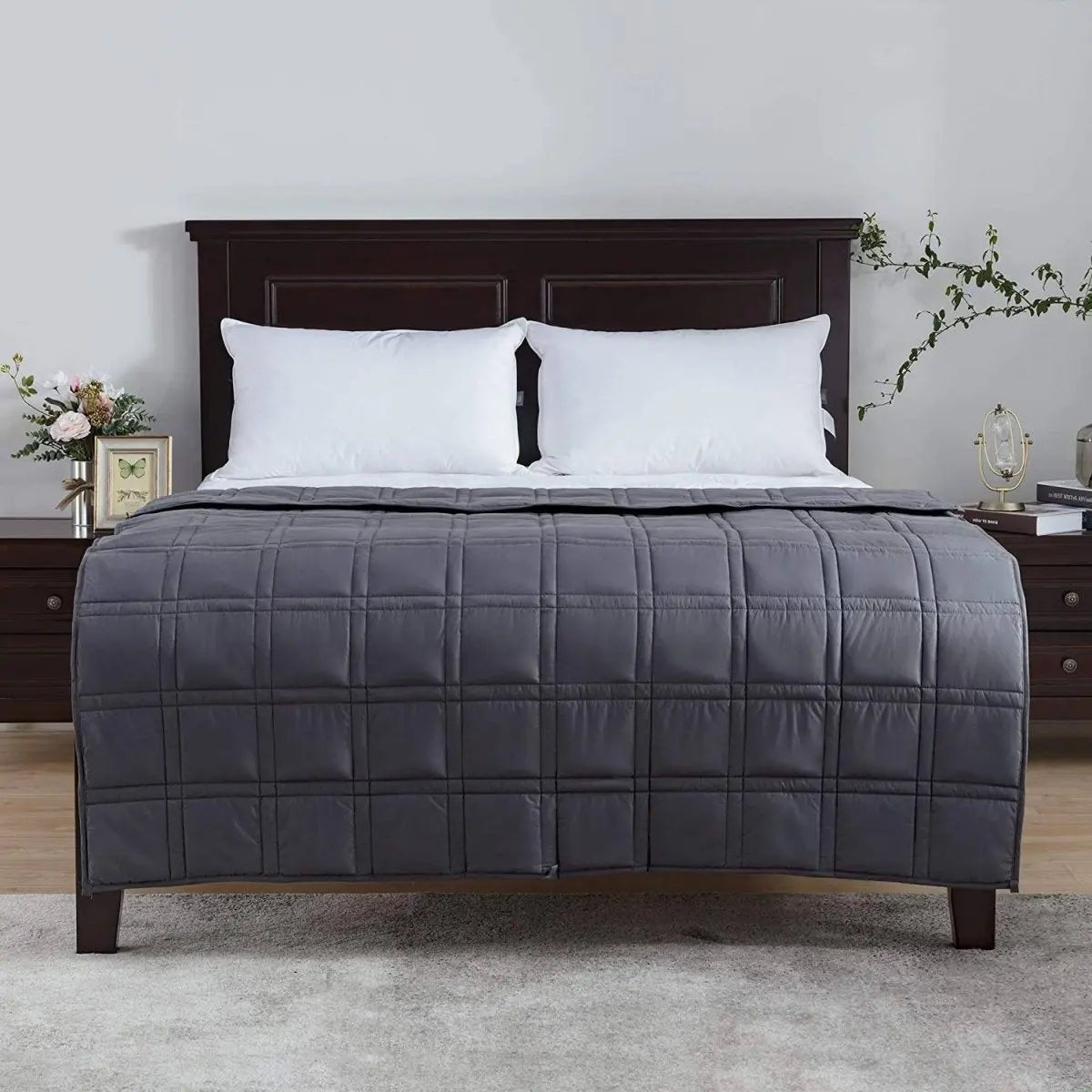
The short answer is that weighted blankets can be helpful for some children, but timing matters. Age, body size, sleep habits, sensory needs, and safety all play a role. A weighted blanket is not the right fit for every child, and it should never feel like a shortcut for sleep struggles that need medical support. Used thoughtfully, though, it can become a calming part of a child’s wind-down routine.
When should kids use weighted blankets by age?
In most cases, weighted blankets are best considered for children over age 3, and only when they can move the blanket on their own without help. That point matters more than a birthday alone. A child needs enough strength, coordination, and body awareness to adjust the blanket easily during sleep or rest.
For babies and toddlers, weighted blankets are not considered safe. Younger children have a higher risk of breathing restriction, overheating, or becoming trapped under bedding they cannot remove. If your child is still in a crib, still waking confused and tangled in bedding, or has trouble moving covers independently, it is too soon.
For preschoolers and school-age children, the question becomes more specific. Is your child looking for pressure and comfort to settle their body? Do they seem soothed by firm hugs, layered blankets, or cozy spaces? Do they struggle most during the transition into sleep, rather than throughout the entire night? Those are often the situations where a weighted blanket may be worth exploring.
Signs a child may benefit from a weighted blanket
A weighted blanket is designed to provide gentle, even pressure. For some children, that pressure feels grounding. It can support calm in moments when their nervous system feels overstimulated or restless.
You might consider one if your child has trouble winding down at bedtime, especially after busy days or emotionally intense evenings. Some children with sensory sensitivities also respond well to deep pressure input. Others seek constant touch, like piling on blankets or asking to be tucked in tightly.
It can also be helpful for children who feel anxious at night, have difficulty settling after transitions, or need more structure around rest. The key is that the blanket should feel comforting, not restrictive. If your child immediately relaxes under gentle weight and asks for it again, that is useful feedback. If they kick it off, complain that it feels heavy, or seem uneasy, it may not be the right tool.
When weighted blankets may not be the right choice
This is where nuance matters. A weighted blanket can support sleep, but it is not appropriate in every situation.
If your child has breathing issues, sleep apnea, poor muscle tone, circulation concerns, or trouble regulating body temperature, it is best to check with a pediatrician or occupational therapist first. The same goes for children with mobility limitations or developmental differences that make it hard to remove the blanket independently.
It is also worth pausing if your child is an especially hot sleeper. Some weighted blankets hold more warmth than expected, and overheating can make sleep worse, not better. Material matters here. Breathable fabrics can make a meaningful difference, especially for children who already wake up sweaty or uncomfortable.
And if bedtime struggles are rooted in nightmares, frequent waking, pain, or significant anxiety, a blanket may help with comfort but should not replace a broader conversation with your child’s healthcare provider.
How heavy should a child’s weighted blanket be?
A common guideline is about 10 percent of a child’s body weight, sometimes with a small adjustment up or down depending on comfort. But that rule is only a starting point, not a fixed prescription.
Some children do better with slightly less weight, especially if they are younger, sensitive to pressure, or using the blanket for winding down rather than overnight sleep. Others may prefer a little more, as long as they can move it freely and it does not cover their face.
Fit matters too. A weighted blanket should rest over the child’s body without hanging heavily off the sides of the bed. If it is too large, the weight may pull awkwardly and feel heavier than intended. For kids, a smaller blanket that fits their body is usually more effective than an oversized one made for a twin or full bed.
When should kids use weighted blankets at bedtime?
For many families, the best answer to when should kids use weighted blankets is not necessarily all night. It may be during the calmest part of the bedtime routine.
A weighted blanket can work especially well during quiet activities before sleep, like reading, listening to a story, or lying still for a few minutes after lights out. This gives your child the calming benefit of deep pressure while you observe how they respond. You can notice whether they seem more relaxed, whether they remove it on their own, and whether it helps the bedtime transition feel smoother.
Some children do fine using a weighted blanket overnight. Others benefit more from 20 to 30 minutes of use before sleep, then switching to their usual bedding. If you are unsure, starting with supervised evening use is often the most comfortable approach.
How to introduce one safely
Start simple. Introduce the blanket at a calm time rather than during a hard bedtime. Let your child try it while reading on the couch or resting beside you. That first experience should feel reassuring, not forced.
Explain it in plain language: this blanket may help your body feel calm and cozy. Then watch their response. Kids are usually clear when something feels good and equally clear when it does not.
Keep the blanket below the shoulders and never over the face or head. Make sure your child can remove it easily. If they sleep in a bunk bed, move a lot at night, or already struggle with tangled bedding, be extra thoughtful about whether overnight use makes sense.
A few nights of observation can tell you a lot. If bedtime becomes easier, your child seems settled, and they wake comfortably, that is a positive sign. If they become sweaty, restless, frustrated, or ask not to use it, listen to that.
Choosing a weighted blanket that feels comfortable, not clinical
Parents often focus on weight first, but texture and breathability matter just as much. A blanket that feels too stiff, too warm, or too bulky will not become part of a restful routine, even if the weight is technically correct.
Look for a child-sized option with even weight distribution and soft, breathable materials. This creates a more refined sleep experience and helps the blanket feel like everyday comfort rather than a medical device. For families who are already trying to build calmer nights, that difference matters.
If your child is temperature-sensitive, cooling fabrics can make the experience much more pleasant. If they love softness and cocoon-like comfort, tactile textures may help them engage with the blanket more naturally. At Better Sleep, that balance between therapeutic support and everyday comfort is central to how sleep products are designed.
A few signs it is working
The early wins are usually small, but meaningful. Bedtime may feel less tense. Your child may stop popping out of bed as often, settle more quickly into stillness, or seem less physically restless while reading or listening to a story.
You may also notice more ease around transitions. For some children, the weighted blanket becomes a cue that the day is ending and their body can let go. That consistency often matters as much as the blanket itself.
Still, it helps to stay flexible. Kids change quickly, and what works at one stage may need adjusting later. A weighted blanket can be a helpful support, but the best bedtime routines always leave room for your child’s cues.
If you are wondering whether now is the right time, start with safety, keep expectations realistic, and pay close attention to comfort. The goal is not to make bedtime perfect. It is to help your child feel a little more grounded, a little more secure, and a little more ready for rest.


Leave a comment