



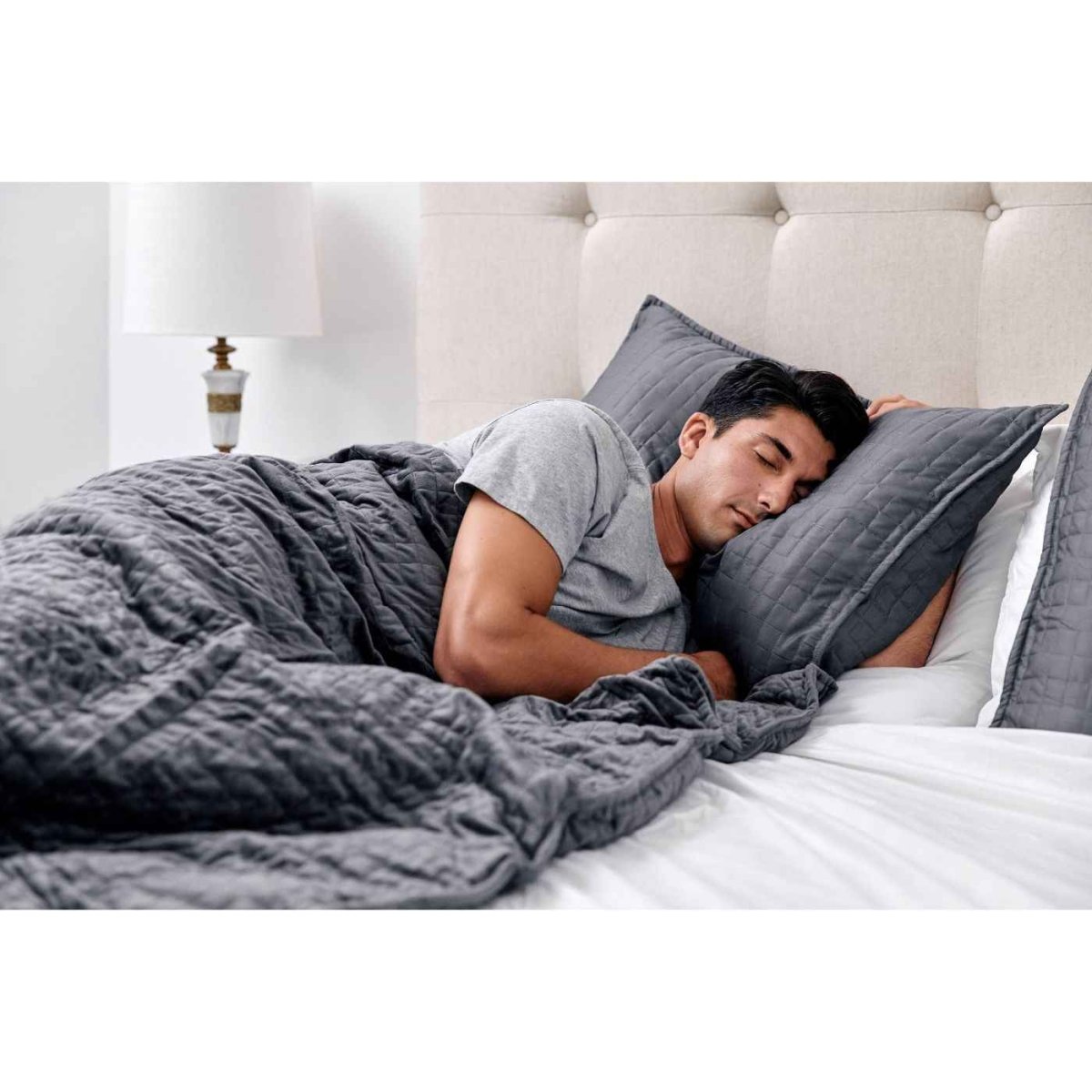
Weighted Blanket Cover Comparison Made Simple
A weighted blanket can feel wonderfully grounding, but the wrong cover can leave you too warm, distracted by shifting fabric, or reluctant to use it at all. This weighted blanket cover comparison focuses on the details that shape nightly comfort: material, temperature, texture, fit, and the care your routine realistically allows.
The cover is not merely a finishing touch. It is the layer against your skin, the part you wash most often, and a major reason a weighted blanket feels right in July as well as January. Choosing thoughtfully helps preserve the calming pressure you love while making your sleep environment more personal and more practical.
Weighted Blanket Cover Comparison by Material
Material is usually the first and most meaningful choice. It affects how quickly heat builds, whether the blanket feels crisp or cozy, and how it performs after repeated washing. There is no single best fabric for everyone. The right choice depends on your body temperature, sensory preferences, and how you want your bed to feel at the end of a long day.
Bamboo for hot sleepers and soft, smooth comfort
Bamboo-based covers are a natural fit for people who wake up warm or dislike heavy, stuffy bedding. Their smooth finish feels cool to the touch, and the fabric is valued for breathable, moisture-managing comfort. It creates a clean, refined sleep surface that works especially well when you want the therapeutic pressure of a weighted blanket without an overly insulated feel.
This option is also appealing for sensitive sleepers who prefer less texture against the skin. Bamboo can feel exceptionally soft without the slippery, synthetic sensation some cooling fabrics have. The trade-off is that delicate fibers benefit from gentle laundering and should be treated with a little more care than a basic cotton cover.
Cotton for everyday versatility
Cotton covers are familiar for a reason. They are breathable, easy to live with, and available in finishes ranging from crisp and airy to soft and brushed. For many households, cotton is the practical middle ground: comfortable in most seasons, straightforward to wash, and suitable for shared beds where one person sleeps warmer than the other.
A lighter cotton weave is a sensible choice for spring and summer, while a denser or brushed finish can feel more substantial when the temperature drops. Cotton does not always feel as silky as bamboo or as plush as fleece, but its balanced, dependable nature is exactly what many sleepers need.
Minky, sherpa, and plush covers for deeper coziness
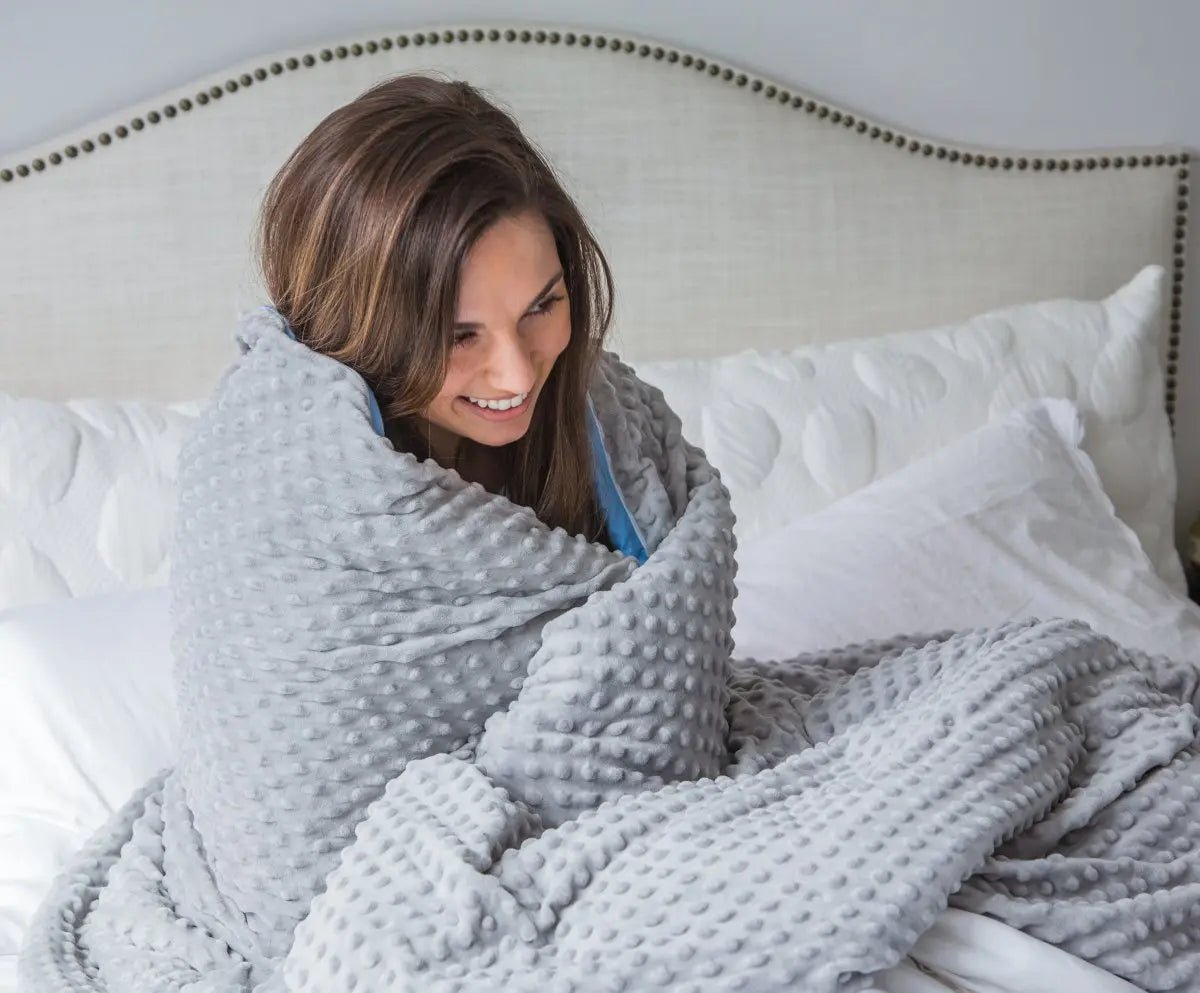
Soft, textured covers offer a more cocooning experience. Minky fabric, sherpa, and other plush finishes can make a weighted blanket feel particularly reassuring during cold nights, quiet evenings on the sofa, or moments when you want extra sensory comfort.
Warmth is the benefit and the consideration. These materials retain more heat than bamboo or lightweight cotton, so they may not suit hot sleepers or rooms that stay warm overnight. If you love the feel of plush texture but tend to overheat, reserve it for seasonal use or choose a blanket system that lets you switch covers as conditions change.
Choose Warmth Based on Your Room, Not Just the Season
It is easy to buy for the weather outside and forget about the temperature where you actually sleep. A well-insulated home, a foam mattress, flannel sheets, or a partner who runs warm can all change what feels comfortable beneath the covers.
If your bedroom stays above 68°F, a breathable bamboo or lightweight cotton cover often provides the most comfortable starting point. If your space is cool or you use the blanket while reading and relaxing, a softer, warmer cover can make sense. For year-round flexibility, consider keeping one cooling cover and one cozy cover. The weighted insert remains the source of gentle pressure, while the outer layer adapts to your season and mood.
This approach is particularly useful for people navigating temperature swings, perimenopause, medication-related warmth, or simply inconsistent indoor heating. You do not have to give up the calm of a weighted blanket because your comfort needs change through the year.
Fit Matters More Than It Seems
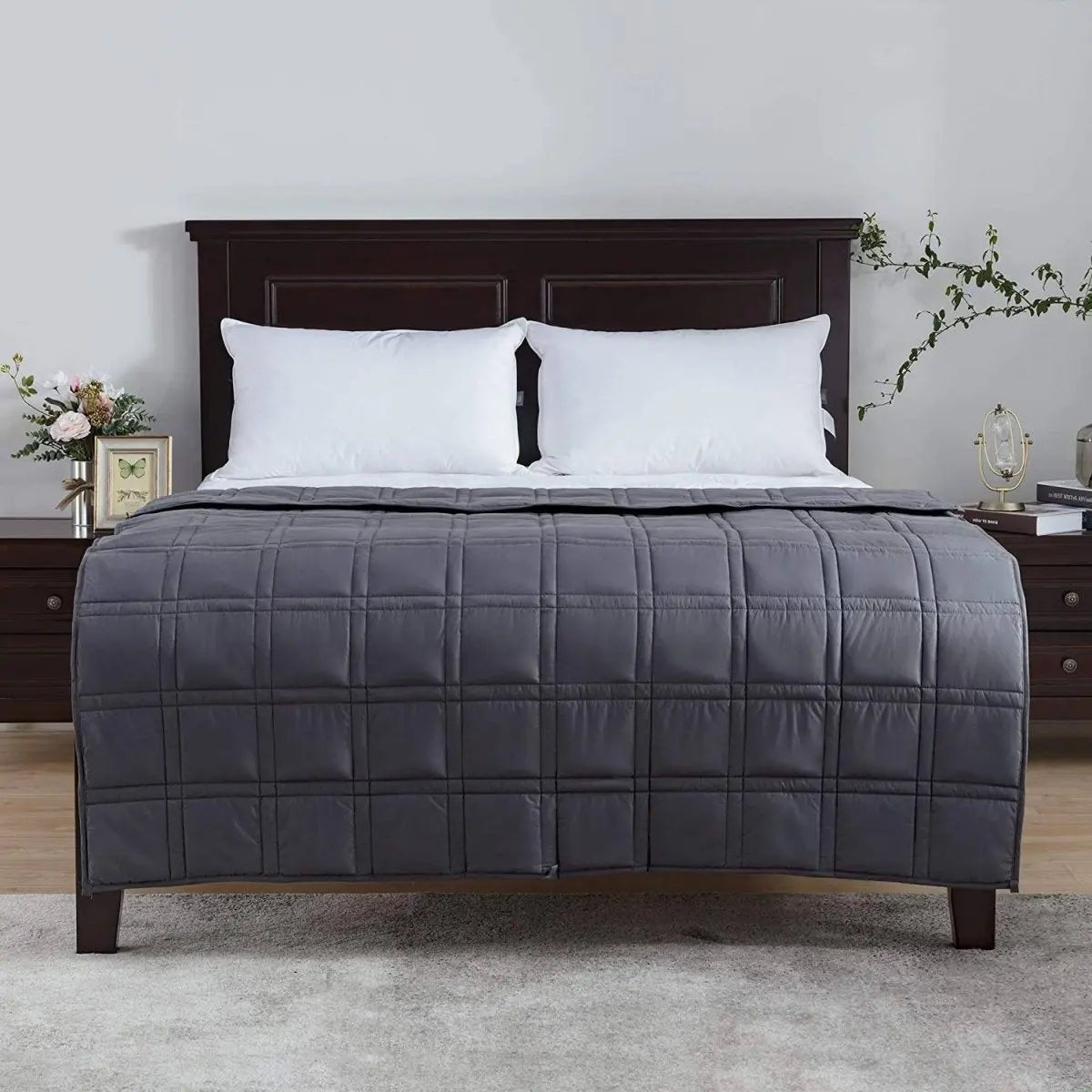
A cover should be made for the dimensions and attachment system of your weighted blanket. A loose cover can bunch around the insert and create uneven pockets of fabric. A cover that is too small can pull at the seams, make fastening difficult, and interfere with the drape that makes a weighted blanket feel secure.
Before choosing, confirm the blanket's length, width, and intended size category. A cover for a throw, twin, queen, or king weighted blanket is not interchangeable simply because the measurements look close. Also look inside the cover for attachment points. Ties, loops, buttons, or zipper systems help anchor the insert so the weight stays evenly distributed rather than sliding toward one end.
Zippers are often the easiest option for regular changes, especially in busy households. Interior ties take a little longer to secure, but they can provide a stable, tidy fit. Neither is universally better. The best choice is the one you will feel comfortable removing, washing, and putting back on without turning laundry day into a project.
Texture Is Part of the Therapeutic Experience
The same blanket weight can feel different depending on the cover. A smooth bamboo layer may feel calming and quiet for a sleeper who gets overwhelmed by tactile stimulation. A plush minky or sherpa texture may offer an additional sense of reassurance for someone who relaxes through touch.
Think about your habits before choosing. Do you sleep in light pajamas or directly against the blanket? Do you like a crisp bed that feels freshly made, or do you seek the comfort of a favorite soft throw? If the blanket is for a child or for sensory support, texture can matter even more. Let the person using it guide the decision whenever possible.
For shared sleep spaces, compromise can be simple: choose a breathable base material for nighttime use and add a textured throw for the person who wants more softness while winding down.
Care and Durability Should Support Real Life
Removable covers make weighted blankets easier to maintain because the heavy insert may require spot cleaning or specialized care. A cover can usually be washed more regularly, helping your bedding stay fresh without asking you to launder the entire blanket after every spill, pet nap, or busy week.
Always follow the care label, particularly with bamboo and plush fabrics. In general, cold water, mild detergent, and low heat or air drying help protect softness and reduce unnecessary wear. Avoid fabric softener when it is not recommended, as it can coat fibers and affect their feel or performance over time.
It can be worth owning a second cover if the blanket is part of your nightly routine. One can be in the wash while the other stays on the bed, preserving the consistency that makes a calming bedtime ritual easier to keep.
A Simple Way to Make Your Choice
Start with the issue you most want your cover to solve. If overheating interrupts sleep, prioritize breathable bamboo or lightweight cotton. If you want an all-purpose, low-fuss option, choose cotton with a secure fit. If cold evenings and tactile comfort are the goal, a plush cover may be the more satisfying choice.
Then check the practical details: exact dimensions, interior attachments, closure style, and wash instructions. A beautiful cover only earns its place in your routine when it fits properly and feels easy to care for.
Better Sleep designs its bedding with this balance in mind: calming comfort, considered materials, and options that help make restorative rest feel easier to return to night after night.
Your best cover is the one you stop noticing once the lights are out. It should feel soft, stay in place, match your temperature needs, and quietly support the small ritual of settling into rest.


Leave a comment